
ESP Technology Explained: How Stability Control Works and How to Diagnose Faults
In this article
ESP Technology Explained: How Stability Control Works and How to Diagnose Faults
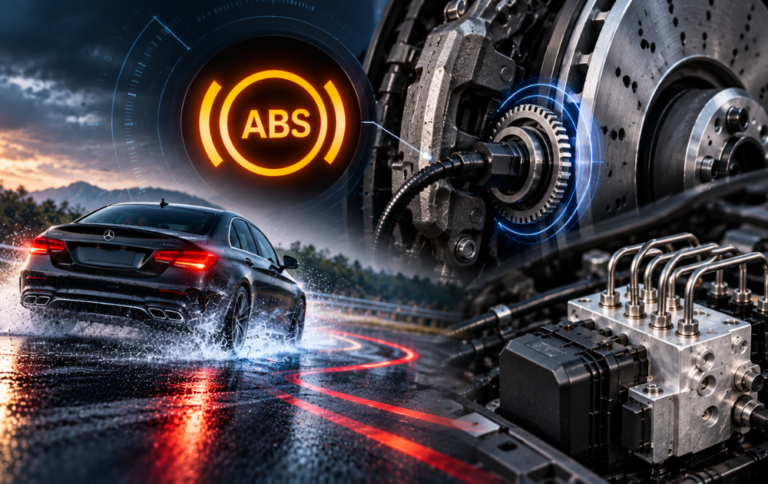
Modern vehicles rely on electronic safety systems to help drivers maintain control in unexpected situations. One of the most important is the Electronic Stability Program (ESP), which helps reduce the risk of skidding and loss of directional control during cornering, sudden maneuvers, and driving on slippery roads.
Imagine approaching a bend on a wet road when your vehicle suddenly starts sliding toward the outside of the corner. Even if you turn the steering wheel in the correct direction, the tires may not have enough grip to follow your intended path. ESP monitors the vehicle’s movement and can intervene by applying the brakes to selected wheels and reducing engine torque when necessary. These actions help the vehicle regain stability when sufficient grip remains available.
Although ESP normally operates without the driver noticing, understanding how it works can help you recognize warning signs, understand common failures, and make better decisions when a problem occurs.
In this guide, we will explore the operation of ESP, its main components, the difference between ESP and other safety systems, and the diagnostic procedures used to identify common faults.
1. What Is the ESP System?
ESP stands for Electronic Stability Program. It is an active vehicle safety system designed to help the driver maintain directional control when the vehicle begins to deviate from its intended path.
The system continuously compares the driver’s steering input with the vehicle’s actual movement. If it detects that the vehicle is not responding as expected, it can apply braking force to individual wheels and, when supported by the vehicle, request a reduction in engine torque.
For example, if the rear of the vehicle begins to slide during a corner, ESP can intervene to help control the vehicle’s rotation. If the front tires lose grip and the vehicle continues straight instead of following the curve, the system can also take corrective action.
ESP is particularly useful during sudden steering maneuvers, emergency obstacle avoidance, and driving on wet or slippery surfaces.
ESP, ESC, and DSC: What is the difference?
Vehicle manufacturers use different names for similar stability-control technology. ESP means Electronic Stability Program, ESC means Electronic Stability Control, and DSC means Dynamic Stability Control. Other manufacturers may use names such as VSC or VSA.
Although the terminology and implementation vary, these systems generally use sensor information and selective braking to help maintain vehicle stability.
It is important to understand that ESP is a safety aid, not a guarantee against accidents. Excessive speed, worn tires, standing water, and insufficient road grip can still cause a vehicle to lose control.
2. How Does ESP Work?
ESP works by continuously monitoring the vehicle’s movement and comparing it with the direction the driver intends to travel.
The system relies on sensor data, electronic processing, and controlled braking to recognize and correct certain stability problems.
Step 1: Monitoring the Driver’s Steering Input
When the driver turns the steering wheel, the steering angle sensor measures the steering angle and provides information about the intended direction of travel.
The system also considers other available vehicle signals to determine how the vehicle should respond to that steering input.
Step 2: Measuring the Vehicle’s Actual Movement
Wheel speed sensors measure the rotational speed of individual wheels. A yaw rate sensor measures how quickly the vehicle rotates around its vertical axis, while a lateral acceleration sensor measures sideways acceleration.
These signals help the control unit understand how the vehicle is actually moving.
Step 3: Detecting a Loss of Stability
The ESP control unit compares the intended direction with the vehicle’s actual movement.
If the vehicle begins to turn more or less than expected, the system may identify a situation involving oversteer, understeer, or another form of instability.
Step 4: Applying Corrective Intervention
When intervention is required, ESP can selectively apply braking force to one or more wheels. It may also request a reduction in engine torque to help manage the vehicle’s movement.
The exact response depends on the vehicle’s behavior, the available grip, and the manufacturer’s control strategy.
Step 5: Helping the Vehicle Regain Stability
The system continuously monitors the vehicle and adjusts its intervention as conditions change.
If sufficient tire grip is available, these actions can help bring the vehicle closer to its intended trajectory.
The entire process happens automatically and very quickly. The driver does not normally need to activate ESP manually during ordinary driving.
3. Main Components of the ESP System
ESP depends on several sensors and electronic and hydraulic components working together. A fault affecting just one of these elements can reduce system performance or cause stability control to become unavailable.
Wheel Speed Sensors
Wheel speed sensors measure the rotational speed of each wheel. Their readings help ESP evaluate wheel behavior and are also used by the ABS and traction control systems.
A faulty sensor, damaged wiring, or a problem with the sensor’s encoder or tone ring may cause incorrect readings and trigger warning lights.
Steering Angle Sensor
The steering angle sensor measures the position and movement of the steering wheel.
ESP uses this information to estimate the driver’s intended direction. Incorrect readings or calibration problems can interfere with the system’s ability to assess vehicle stability.
Yaw Rate Sensor
The yaw rate sensor measures how quickly the vehicle rotates around its vertical axis.
This information helps ESP identify situations where the vehicle is rotating more or less than expected, such as when the rear begins to slide outward during a corner.
Lateral Acceleration Sensor
This sensor measures sideways acceleration during cornering and other vehicle movements. Depending on the vehicle, it may be integrated into a combined stability sensor unit.
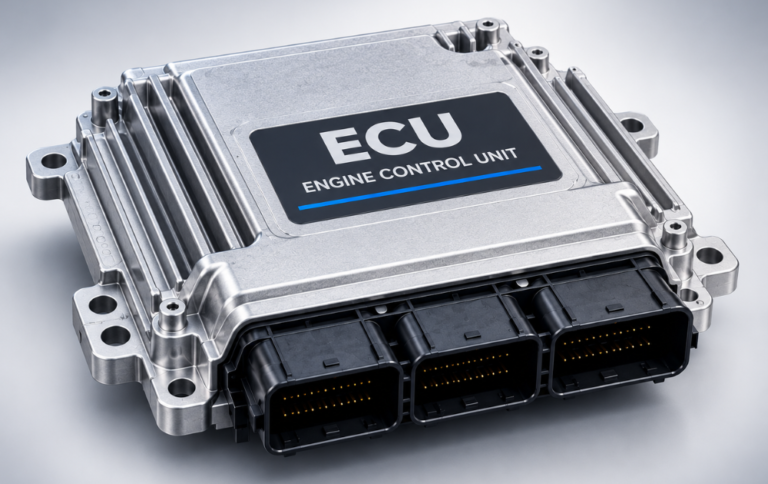
Electronic Control Unit
The electronic control unit processes sensor signals and determines whether corrective intervention is needed.
It coordinates the response through the braking system and, where supported, the engine management system.
ABS Hydraulic Control Unit
The ABS hydraulic control unit regulates brake pressure through valves and other hydraulic components.
ESP uses this hardware to apply braking force selectively to individual wheels, sometimes without requiring the driver to press the brake pedal.
Because ABS and ESP share important components, certain ABS faults can also affect stability control.
Engine Management System
On vehicles that support this function, ESP can communicate with the engine management system to reduce engine torque.
This helps manage the driving force delivered to the wheels when excessive acceleration contributes to instability.
4. Understeer and Oversteer: How ESP Helps
To understand the value of ESP, it is useful to recognize two common situations in which a vehicle can lose directional stability.
What Is Understeer?
Understeer occurs when the front tires lose sufficient grip and the vehicle turns less than the driver intends.
For example, a driver enters a corner and turns the steering wheel, but the vehicle continues toward the outside of the bend instead of following the intended curve.
This can happen when entering a corner too quickly or driving on a slippery surface.
ESP can apply braking force to selected wheels and may reduce engine torque to help restore a more stable trajectory. The exact intervention depends on the vehicle and the conditions.
What Is Oversteer?
Oversteer occurs when the rear tires lose grip and the rear of the vehicle begins to slide outward during a turn.
If the slide becomes more severe, the vehicle may rotate more sharply than the driver intends.
ESP detects the difference between the vehicle’s expected and actual movement and can apply corrective braking to help control that rotation.
Why Does This Matter?
Both understeer and oversteer can make it difficult to maintain the intended direction of travel.
ESP is designed to help manage these situations before the loss of control becomes more severe. However, it cannot restore grip when the tires have exceeded the available traction, and it cannot guarantee that the vehicle will remain on the road.
5. ESP vs. ABS vs. Traction Control
ESP, ABS, and traction control are closely related safety technologies, but they have different primary functions.
| System | Main Function | Typical Situation |
|---|---|---|
| ABS | Helps prevent the wheels from locking during braking. | Heavy braking when a wheel is at risk of locking. |
| Traction Control (TCS) | Helps reduce excessive driven-wheel spin. | Accelerating on a slippery surface. |
| ESP | Helps maintain directional stability. | When the vehicle begins to skid or deviate from its intended path. |
These systems often share sensors, electronic control hardware, and braking components.
For example, ABS helps the driver maintain steering control during braking, while traction control helps manage excessive wheel spin during acceleration. ESP focuses on the vehicle’s overall stability and may intervene through selective braking and engine torque reduction.
A fault in a shared component can affect more than one system, which is why ABS and ESP warning lights sometimes appear together.
6. Understanding the ESP Warning Light
The ESP warning light can communicate different conditions depending on its behavior and the vehicle’s design.
ESP Light Flashing While Driving
A flashing ESP indicator commonly means that the system is actively intervening because it has detected wheel slip or instability.
This may occur when accelerating on a slippery road or cornering with limited grip.
Reduce your speed smoothly, avoid sudden steering or acceleration, and allow the vehicle to settle. A flashing light during a brief intervention does not necessarily indicate a fault.
ESP Light Staying On
If the warning light remains illuminated after the vehicle’s normal startup checks, the system may have detected a fault or may have been switched off.
Possible causes include a faulty wheel speed sensor, steering angle sensor problems, damaged wiring, low battery voltage, or an ABS control system fault.
A diagnostic scan is usually needed to determine why the warning remains on.
ESP OFF Indicator
An ESP OFF indicator generally means that stability control has been switched off or reduced through a vehicle setting.
Some vehicles allow certain functions to remain active even when a reduced-intervention mode is selected. The exact behavior varies by model.
If the indicator appears unexpectedly, consult the owner’s manual to check whether the system has been disabled or a fault is present.
ABS and ESP Warning Lights Appearing Together
When both warning lights illuminate, a shared component or electrical problem may be responsible.
Possible causes include a wheel speed sensor fault, an electrical supply problem, damaged wiring, or an ABS control unit malfunction.
The vehicle may retain conventional braking, but ABS and ESP functions may be unavailable. The exact consequences depend on the fault.
If braking behavior changes, a red brake warning light appears, or the brake pedal feels abnormal, stop somewhere safe and seek professional assistance.
7. Common Causes of ESP System Failure
ESP problems can originate in sensors, electrical circuits, the braking system, or related vehicle components.
Faulty wheel speed sensor: A failed sensor, damaged connector, corroded wiring, or defective encoder can provide incorrect wheel speed information.
Steering angle sensor problems: Incorrect readings, internal faults, or calibration issues can prevent the control unit from accurately interpreting the driver’s steering input.
Yaw rate or acceleration sensor faults: Missing or implausible sensor signals can prevent the system from accurately evaluating vehicle movement.
Damaged wiring or connectors: Moisture, corrosion, loose connections, or broken wires can interrupt sensor signals or communication with the control unit.
Low battery voltage: A weak battery, charging system fault, or poor electrical connection can trigger faults in several electronic systems.
ABS hydraulic unit or control module failure: Since ESP relies on the braking system to regulate pressure at individual wheels, certain ABS faults can also disable stability control.
Incorrect tire sizes or uneven tire conditions: Significant differences in tire rolling circumference or tire condition can affect vehicle behavior and the interpretation of wheel speed data.
Calibration problems after repairs: Some vehicles require steering angle sensor calibration or other initialization procedures after relevant steering, suspension, or alignment work.
The presence of an ESP warning light does not automatically mean the ESP control unit has failed. Correct diagnosis should identify the underlying cause before any component is replaced.
8. How to Diagnose ESP Faults Correctly
A professional diagnosis should follow a structured process rather than relying on the dashboard warning alone.
Step 1: Identify the Symptoms
Determine whether the ESP light flashes or stays on, whether the ABS warning light is also illuminated, and whether the problem appeared after a repair or electrical issue.
These details help narrow the possible causes.
Step 2: Scan the ABS/ESP Control Unit
Use a compatible diagnostic tool to retrieve fault codes from the ABS/ESP control unit. Depending on the symptoms, other modules may also need to be scanned.
Record the codes and related information before clearing them.
A fault code indicates a detected problem or condition; it does not always prove that the component named in the code is defective.
Step 3: Examine Live Sensor Data
Check available live readings, including individual wheel speeds, steering angle, yaw rate, lateral acceleration, and system voltage.
Compare the readings with one another and with the manufacturer’s specifications to identify missing, implausible, or inconsistent signals.
Step 4: Inspect Components and Electrical Circuits
Inspect the components associated with the reported faults. This may include wheel speed sensors, tone rings, connectors, wiring harnesses, grounding points, and the ABS hydraulic unit.
Use suitable electrical testing procedures when required to identify wiring faults or power supply problems.
Step 5: Repair and Perform Required Calibration
Repair or replace the confirmed faulty component according to the vehicle manufacturer’s procedure.
Where necessary, perform steering angle sensor calibration, stability sensor initialization, or other specified service functions.
Step 6: Verify the Repair
Clear fault codes when appropriate, check whether they return, and confirm that the relevant sensor readings and system functions are operating correctly.
Any required dynamic testing should follow the manufacturer’s safety procedures. Deliberately provoking a skid on public roads is not an appropriate diagnostic method.
Professional tip: Do not replace an ABS sensor, steering angle sensor, or control module simply because its name appears in a fault description. Check the relevant signals, wiring, power supply, and related components before deciding which part needs repair.
9. Can You Drive with the ESP Warning Light On?
Whether it is safe to continue driving depends on the warning and the vehicle’s behavior.
If the ESP light flashes briefly while driving on a slippery surface, it commonly indicates normal system intervention.
If the warning remains on, stability control may be unavailable. The vehicle may still have conventional braking, but it may no longer provide the same level of electronic assistance during a skid.
If the ABS warning light is also illuminated, ABS may be affected. If a red brake warning appears, braking performance changes, or the pedal feels abnormal, stop safely and seek professional assistance.
When a persistent ESP warning appears:
- Reduce your speed and avoid sudden maneuvers.
- Increase your following distance.
- Avoid aggressive cornering and slippery roads where possible.
- Check the owner’s manual for the specific warning.
- Arrange a diagnostic inspection promptly.
Do not assume that all braking and stability functions are working normally just because the vehicle remains drivable.
10. How to Maintain the ESP System
ESP usually does not require a separate routine service interval, but it depends on the condition of several other vehicle systems.
To help keep it operating correctly:
- Maintain the recommended tire pressure and use approved tire sizes.
- Keep the braking system in good condition.
- Address persistent ABS and ESP warning lights promptly.
- Maintain the battery and charging system.
- Inspect damaged sensor wiring and electrical connectors.
- Follow required calibration procedures after relevant repairs.
- Use diagnostic equipment compatible with the vehicle when investigating electronic faults.
Tire condition is especially important. ESP can intervene to help maintain stability, but its effectiveness depends on the grip available between the tires and the road.
Frequently Asked Questions About ESP
Is ESP the Same as ESC?
ESP and ESC generally refer to similar electronic stability-control technology. The name depends on the vehicle manufacturer, and the precise features may vary between models.
Why Does the ESP Light Flash When I Accelerate?
The light may flash because the system has detected excessive wheel slip or instability and is intervening to help maintain control. Reduce acceleration smoothly and adjust your speed to the road conditions.
Can a Faulty ABS Sensor Cause an ESP Warning?
Yes. Wheel speed sensors provide information used by both ABS and ESP. A faulty sensor, encoder, or related electrical circuit can affect both systems.
Can a Weak Battery Trigger an ESP Fault?
Yes. Low voltage or an unstable electrical supply may trigger faults in electronic control systems. Battery condition should be tested rather than assumed to be the cause.
Does ESP Work Automatically?
Yes. Under normal conditions, ESP continuously monitors vehicle movement and intervenes when necessary. Drivers generally do not need to activate it manually.
Does ESP Prevent Every Skid?
No. ESP can help control certain stability problems, but it cannot overcome the physical limits of tire grip. Excessive speed, worn tires, ice, standing water, and other adverse conditions can still cause a loss of control.