How Advanced Driver Assistance Systems (ADAS) Work: A Guide to Modern Car Safety
In this article
Introduction to Advanced Driver Assistance Systems (ADAS)
Modern cars are no longer just machines controlled by mechanical components. They are equipped with cameras, radar sensors, computers, and sophisticated software that can monitor the road and assist drivers in different situations.
One of the most important developments in automotive technology is Advanced Driver Assistance Systems (ADAS). These systems are designed to improve safety, reduce the risk of accidents, and make driving easier.
What Is ADAS?
ADAS refers to a collection of electronic systems that help drivers monitor their surroundings and respond to potential hazards. Depending on the vehicle, these systems can provide warnings, assist with steering or braking, and in some situations automatically take action.
ADAS relies on several technologies working together, including:
- Cameras
- Radar sensors
- Ultrasonic sensors
- GPS and navigation data
- Electronic control units
- Artificial intelligence and software
Common ADAS Features
Adaptive Cruise Control
Unlike traditional cruise control, adaptive cruise control can automatically adjust the vehicle’s speed according to the traffic ahead. The system uses sensors to maintain a safe following distance.
Lane-Keeping Assistance
Lane-keeping systems use cameras to detect road markings. If the vehicle begins to leave its lane unintentionally, the system can warn the driver or provide steering assistance.
Automatic Emergency Braking
Automatic emergency braking can detect certain obstacles or vehicles in front of the car. If the system determines that a collision may be imminent, it can warn the driver and, depending on the system, apply the brakes automatically.
Blind-Spot Monitoring
Blind-spot monitoring uses sensors to detect vehicles that may be difficult for the driver to see. A warning is usually displayed in the side mirror or dashboard when another vehicle is detected.
How Do These Systems Work Together?
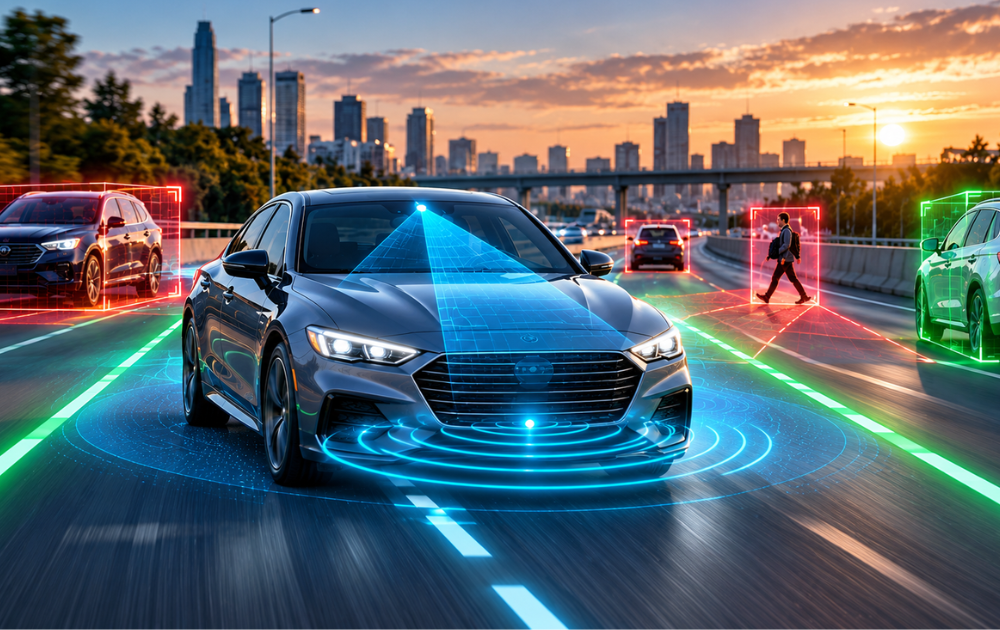
ADAS features don’t operate independently. Modern vehicles can combine information from multiple sensors to create a better understanding of the environment around the car.
For example, a vehicle may use a camera to identify lane markings while radar detects another vehicle ahead. The vehicle’s computer processes this information and determines how the driver-assistance system should respond.
This combination of sensors, computing power, and software is one of the major changes taking place in modern automotive technology.
Are ADAS Systems Fully Autonomous?
No. This is an important distinction.
Most ADAS features are designed to assist the driver rather than replace the driver. The driver remains responsible for monitoring the road and controlling the vehicle unless the vehicle is specifically designed and legally approved for a higher level of automated driving.
ADAS technology continues to evolve, and manufacturers are developing increasingly sophisticated systems that can handle more driving tasks.
The Future of Vehicle Safety
As automotive technology continues to develop, ADAS will become increasingly integrated with connected vehicles, artificial intelligence, and autonomous-driving technologies.
The combination of better sensors, faster computers, and improved software could allow vehicles to understand their surroundings more accurately and assist drivers in a wider range of situations.
Modern vehicles are becoming more intelligent, but the goal of ADAS remains simple: helping drivers stay safer on the road.
For the card on your website
You could display it like this:
Automotive Technology
How Advanced Driver Assistance Systems (ADAS) Work: A Guide to Modern Car Safety
Modern vehicles use cameras, radar, sensors, and intelligent software to improve safety. Discover how ADAS technologies such as adaptive cruise control, lane-keeping assistance, automatic emergency braking, and blind-spot monitoring work.
Read More →
I would use this topic rather than another article about software-defined vehicles because it gives your Automotive Technology section more variety while still keeping the articles connected.
okay that sounds interesting write something prodessional
Absolutely. For a professional automotive-technology website, I’d make it sound like an industry article, not a generic AI-written blog post. It should be informative, structured, and technically credible without becoming too difficult for ordinary car owners to understand.
Here’s a polished version:
How Advanced Driver Assistance Systems (ADAS) Are Transforming Modern Vehicles
Advanced Driver Assistance Systems (ADAS) have become an increasingly important part of modern vehicle technology. By combining cameras, radar, sensors, electronic control units, and sophisticated software, ADAS can monitor the vehicle’s surroundings and assist the driver in identifying and responding to potential hazards.
While these systems are not a replacement for an attentive driver, they represent an important step toward safer, more connected, and increasingly automated vehicles.
What Is ADAS?
ADAS is a group of electronic technologies designed to support drivers during everyday driving. Depending on the vehicle and its level of equipment, these systems can provide warnings, assist with steering and braking, or automatically perform certain driving functions.
Modern ADAS systems may use several sources of information simultaneously, including:
- Cameras to identify lane markings, vehicles, pedestrians, and traffic signs.
- Radar sensors to measure the distance and relative speed of objects.
- Ultrasonic sensors to detect nearby objects, particularly during parking.
- Electronic control units (ECUs) to process sensor information and control specific vehicle functions.
- Software and algorithms to interpret the vehicle’s environment and determine an appropriate response.
The combination of these technologies allows a vehicle to continuously analyze what is happening around it.
Key ADAS Technologies
Adaptive Cruise Control
Adaptive Cruise Control goes beyond conventional cruise control by monitoring traffic ahead of the vehicle.
When a slower vehicle is detected, the system can reduce the vehicle’s speed to maintain a predefined following distance. When the road becomes clear, it can accelerate back toward the selected cruising speed.
This technology is particularly useful during highway driving and in changing traffic conditions.
Lane Keeping and Lane Departure Assistance
Cameras mounted near the front of the vehicle can monitor road markings and determine the vehicle’s position within its lane.
If the vehicle begins to leave its lane unintentionally, the system may provide a visual, audible, or steering warning. Some systems can also apply corrective steering assistance to help keep the vehicle within the lane.
Automatic Emergency Braking
Automatic Emergency Braking is designed to help reduce the severity of certain collisions or, when conditions allow, prevent them.
The system uses information from cameras, radar, or both to identify potential obstacles. If a collision appears imminent and the driver does not respond sufficiently, the vehicle may automatically apply the brakes.
The exact capabilities vary considerably between manufacturers and vehicle models.
Blind-Spot Monitoring
A vehicle’s blind spots can make it difficult to detect other road users when changing lanes.
Blind-spot monitoring uses sensors to detect vehicles approaching or traveling alongside the vehicle. When another vehicle is detected in a relevant blind-spot area, the system can provide a warning, often through an indicator located in the side mirror.
Some advanced systems can also provide additional steering assistance.
How ADAS Systems Work Together
One of the most important aspects of modern ADAS is sensor integration.
A single sensor cannot always provide a complete picture of the vehicle’s surroundings. For example, a camera can recognize road markings and objects, while radar can provide accurate information about the distance and movement of objects.
The vehicle’s electronic systems combine this information and continuously analyze the environment.
This process can be summarized as:
Sensors → Data Processing → Environmental Understanding → Driver Assistance
The faster and more accurately this process occurs, the more effectively the vehicle can respond to changing road conditions.
ADAS and Vehicle Maintenance
As vehicles become more dependent on electronic systems, maintaining ADAS components becomes increasingly important.
A windshield replacement, wheel alignment, suspension repair, collision repair, or even changes to certain vehicle components can potentially affect the accuracy of sensors and cameras.
In some situations, ADAS calibration may therefore be required after maintenance or repairs.
For example, if a forward-facing camera is incorrectly positioned, the system may not accurately determine the vehicle’s position relative to lane markings. Proper calibration ensures that the sensors and cameras operate according to the manufacturer’s specifications.
This is why modern automotive diagnostics increasingly involves both mechanical expertise and electronic diagnostic equipment.
Is ADAS the Same as Autonomous Driving?
Not necessarily.
ADAS systems are primarily designed to assist the driver. The driver is generally still responsible for monitoring the road, understanding the system’s limitations, and maintaining control of the vehicle.
Autonomous-driving technologies aim to perform a much broader range of driving tasks with less or, depending on the system, potentially no continuous human control.
The distinction is important: having advanced driver assistance features does not automatically mean that a vehicle is capable of fully autonomous driving.
The Future of Automotive Technology
ADAS is only one part of the broader transformation taking place in the automotive industry.
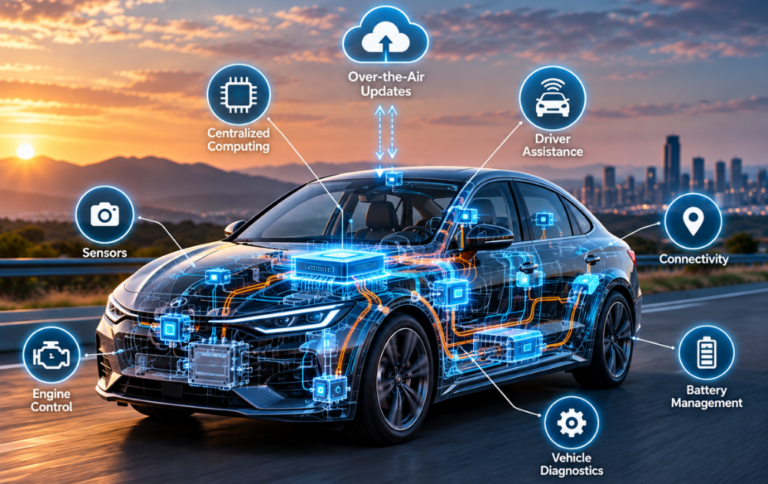
As vehicles become increasingly software-driven, technologies such as artificial intelligence, connected vehicles, over-the-air software updates, advanced computing platforms, and autonomous-driving systems are becoming more closely integrated.
The modern vehicle is evolving from a primarily mechanical machine into a sophisticated combination of mechanical engineering, electronics, computing, sensors, and software.
For drivers and automotive professionals alike, understanding these technologies is becoming an essential part of understanding the modern automobile.