How to Choose the Right Car Battery: A Complete Buyer’s Guide (2026)
In this article you’ll learn
How to Choose the Right Car Battery: A Complete Buyer’s Guide (2026)
Buying a new car battery may seem simple until you walk into a shop and discover dozens of options with different sizes, prices, capacities, and technologies. Some batteries look almost identical but are not suitable for the same vehicle. Choosing the wrong one can lead to starting problems, poor performance, or a battery that wears out sooner than expected.
The good news is that you do not need to be a mechanic to make the right choice. By understanding a few important specifications and knowing what to check before paying, you can find a battery that fits your car, meets its electrical requirements, and offers good value for money.
In this guide, you will learn how to identify the correct battery for your vehicle, understand the numbers printed on its label, compare battery types, avoid common buying mistakes, and know when it is worth spending more.
1. Start With Your Car’s Requirements
Before comparing brands or prices, find out exactly what your car needs. This is the most important step because the best battery is not necessarily the most expensive one or the one with the highest numbers on its label. It is the battery that matches your vehicle’s specifications.
There are three practical ways to identify the correct battery:
- Check your owner’s manual: Look for the battery specifications recommended by the vehicle manufacturer.
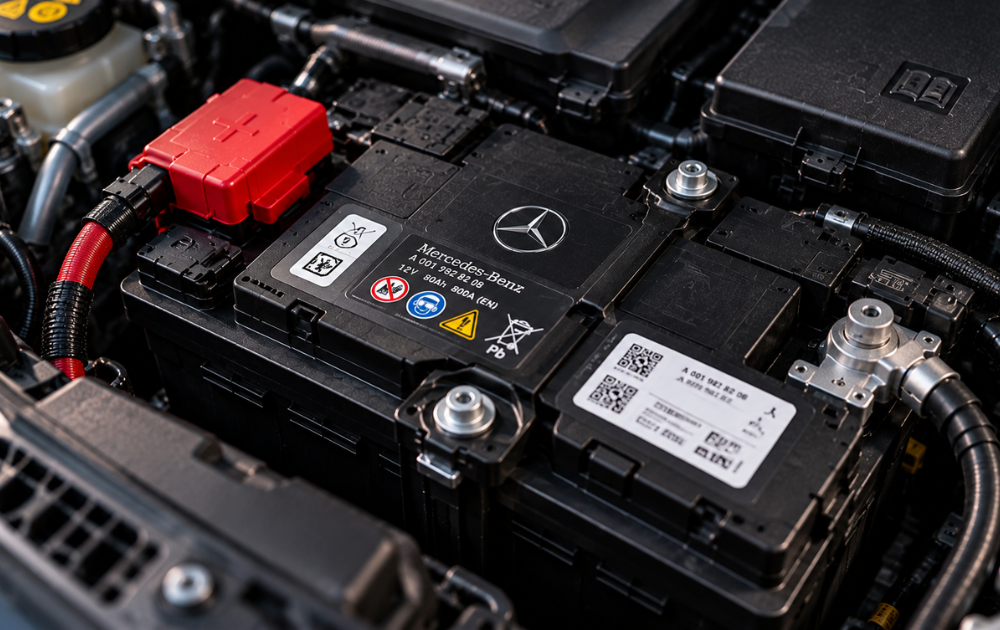
- Inspect your current battery: Read its label and note the battery type, capacity, starting-power rating, and size code.
- Use a reliable battery compatibility guide: Enter your car’s make, model, year, engine type, and, when requested, its exact version.
If your car is second-hand, do not automatically assume that the battery currently installed is the correct one. A previous owner may have fitted an unsuitable replacement.
A useful tip: Before visiting a battery shop, take a clear photograph of your existing battery label. This makes it easier to compare specifications and reduces the risk of buying an incompatible product.
2. Choose the Correct Battery Size
One of the first things to check is the battery’s physical size.
A car battery must fit securely into its designated compartment. If it is too long, too tall, or too wide, it may not fit properly. Even if you manage to install it, an incorrectly fitted battery can move when the car accelerates, brakes, or travels over uneven roads.
You must also check the terminal positions. The positive and negative terminals need to match the layout of your vehicle’s battery cables.
Two batteries can look almost identical but have their terminals positioned differently. If the cables cannot reach the correct terminals comfortably, the battery is not a suitable replacement.
What should you check?
Before purchasing, confirm the following:
- Length, width, and height: The battery must fit within the available space.
- Battery size code: Match the recommended code or an officially approved equivalent.
- Terminal position: The positive and negative posts must be correctly positioned.
- Terminal type: Make sure the connections match your vehicle.
- Mounting system: The battery must be secured using the appropriate factory mounting arrangement.
Battery size codes vary between markets. For example, some vehicles use BCI group sizes, while others use European DIN/EN or Japanese JIS designations.
Never choose a battery based only on its appearance. Always verify its compatibility with your specific vehicle.
3. Understand the Numbers on a Car Battery
Battery labels contain several numbers and abbreviations. Understanding them will help you compare products and avoid paying for features your vehicle does not need.
Three important specifications are ampere-hour capacity (Ah), cold cranking amps (CCA), and reserve capacity (RC).
Ampere-Hour Capacity (Ah)
The ampere-hour rating indicates how much electrical charge a battery can store under specified test conditions.
For example, a battery rated at 60 Ah has a nominal capacity of 60 ampere-hours under its rating conditions. However, this does not mean it will always deliver exactly 60 amps for one hour. Actual performance depends on factors such as temperature, discharge rate, battery condition, and the voltage required by the electrical system.
A higher Ah rating may be useful for a vehicle with greater electrical demands, but you should stay within the battery capacity range approved by the manufacturer.
What should you do? Check the Ah rating recommended for your car and choose a compatible battery that meets the required specification.
Cold Cranking Amps (CCA)
Cold cranking amps measure a battery’s ability to deliver starting current under a standardized cold-temperature test.
This rating is especially important in cold climates, where an engine can be harder to start. A battery with insufficient starting power may struggle to turn the engine over.
For example, if your vehicle requires a battery with a minimum rating of 550 CCA, a compatible battery rated at 600 CCA may be suitable. However, you must still verify its size, technology, and other specifications.
A higher CCA rating is not a substitute for correct battery compatibility.
Reserve Capacity (RC)
Reserve capacity indicates how long a fully charged battery can supply a specified electrical load under standardized test conditions before its voltage falls below a defined limit.
This rating can be useful when comparing compatible batteries, particularly for vehicles with significant electrical demands.
However, the battery is not designed to replace the alternator. If the charging system fails, the vehicle may stop operating even if the battery has a high reserve capacity.
Quick Comparison Table
| Specification | What It Means | What to Check Before Buying |
|---|---|---|
| Ah | Electrical charge capacity | Match the manufacturer’s recommended range |
| CCA | Starting power under cold-test conditions | Meet or exceed the required rating |
| RC | Ability to supply a specified load for a period | Follow the manufacturer’s recommendation |
| Size code | Standardized battery dimensions and layout | Confirm compatibility with your vehicle |
| Voltage | Electrical system voltage | Use the voltage specified for your vehicle |
Remember that a battery with impressive numbers is not automatically the right choice. Correct fitment and the required battery technology come first.
4. Understand the Different Types of Car Batteries
Not all car batteries use the same technology. Choosing the right type is particularly important for modern vehicles equipped with automatic start-stop systems and advanced electrical features.
The three common types you should understand are conventional flooded lead-acid batteries, EFB batteries, and AGM batteries.
Conventional Flooded Lead-Acid Batteries
Conventional lead-acid batteries are widely used in vehicles without demanding start-stop requirements.
They are generally more affordable than AGM batteries and are suitable for many older vehicles and conventional cars.
Depending on the model, they may be available in maintenance-free designs or versions that require periodic maintenance.
Best suited for: Vehicles whose manufacturers specify a conventional lead-acid battery.
Main advantage: Usually the most economical option.
Main limitation: Generally less suited to the frequent charge-and-discharge cycles required by start-stop systems.
EFB Batteries
EFB stands for Enhanced Flooded Battery.
These batteries are designed to handle more charge-and-discharge cycles than conventional flooded batteries. They are commonly used in vehicles equipped with entry-level start-stop systems.
Start-stop technology automatically switches the engine off when the vehicle stops under suitable conditions and restarts it when the driver is ready to move. This increases the demands placed on the battery.
An EFB battery is designed to handle those demands more effectively than a conventional battery.
Best suited for: Vehicles that specify EFB technology, including many models with start-stop systems.
Main advantage: Improved cycling performance compared with conventional flooded batteries.
Main limitation: It is not automatically a suitable replacement for every vehicle that uses AGM technology.
AGM Batteries
AGM stands for Absorbent Glass Mat.
In an AGM battery, the electrolyte is absorbed into glass-fibre separators between the lead plates. This construction supports demanding electrical applications and repeated charge-and-discharge cycles.
AGM batteries are commonly used in vehicles with advanced start-stop systems, substantial electrical demands, or energy recovery during braking.
They generally cost more than conventional batteries, so buying one for a vehicle that does not require it may not offer enough practical benefit to justify the extra expense.
Best suited for: Vehicles whose manufacturers specify AGM technology.
Main advantage: Strong cycling performance and suitability for demanding electrical systems.
Main limitation: Usually more expensive than conventional batteries.
Which Battery Type Should You Buy?
| Battery Type | Typical Application | Relative Cost | Important Consideration |
|---|---|---|---|
| Conventional flooded | Vehicles without demanding start-stop requirements | Low | Confirm that the vehicle permits this technology |
| EFB | Many entry-level start-stop systems | Medium | Match the original specification |
| AGM | Many advanced start-stop systems and vehicles with high electrical demands | High | Do not downgrade to an unsuitable battery type |
Important: If your car originally requires an AGM battery, do not replace it with a conventional battery simply because it is cheaper. Similarly, do not assume that every EFB battery can replace an AGM battery. Follow the manufacturer’s approved replacement specifications.
5. How to Choose a Battery for Your Driving Habits
Your driving habits can influence battery performance and service life. However, your habits should help you compare compatible batteries, not override the manufacturer’s requirements.
If You Mainly Drive Short Distances
Frequent short trips may not give the alternator enough time to replace the energy used during starting. Over time, this can leave the battery undercharged.
If most of your journeys are short, pay attention to battery condition and charging-system health. A suitable battery with the correct technology and specifications is essential.
Do not automatically buy a much larger battery. A larger capacity does not solve every charging problem.
If You Drive Long Distances Regularly
Longer journeys generally give the charging system more time to replenish the energy used during starting.
In this situation, there is usually no reason to buy a more expensive battery solely because you drive long distances. Choose a reliable battery that matches your vehicle’s requirements.
If Your Car Has Many Electrical Features
Modern vehicles may use numerous electronic systems, including infotainment screens, electric seats, driver-assistance features, and other convenience equipment.
These features do not all consume the same amount of energy, and their effect depends on how the vehicle is designed and used.
If your car has high electrical demands, follow the manufacturer’s battery specifications rather than choosing a battery based on the number of features alone.
If You Live in a Hot Climate
Heat can accelerate battery ageing and increase the rate at which a battery loses service life.
This matters in regions where summer temperatures are high. Parking in the shade when possible, keeping the battery properly secured, and checking the charging system can help reduce avoidable problems.
A more expensive battery is not automatically immune to heat damage. Correct fitment, suitable technology, manufacturing quality, and proper charging all matter.
6. Should You Buy a Cheap, Mid-Range, or Premium Battery?
Price is an important part of any purchase, but the cheapest battery is not always the most economical choice in the long term.
A battery that fails early can mean another purchase, additional labour costs, and the inconvenience of a vehicle that will not start.
At the same time, buying the most expensive battery available does not guarantee the best result for your car.
The smart approach is to compare batteries that are all compatible with your vehicle.
Budget Batteries
Budget batteries can be a reasonable choice when they meet the required specifications and come from a trustworthy seller.
Before purchasing, check the warranty, manufacturing date, and availability of after-sales support.
Avoid buying a battery simply because it is cheap if the seller cannot confirm its specifications or condition.
Mid-Range Batteries
Mid-range batteries may offer a good balance between purchase price, performance, warranty coverage, and availability.
For many drivers, this category is worth comparing first, provided the battery meets the vehicle manufacturer’s requirements.
Premium Batteries
Premium batteries may offer particular advantages depending on their construction, intended application, warranty, and manufacturer.
They can be worthwhile for vehicles that require advanced battery technology or have demanding electrical systems.
However, the premium label alone does not prove that a battery is the best choice for your car.
What Matters More Than the Price?
Before making your final decision, compare these five points:
- Compatibility: Does the battery match your vehicle’s requirements?
- Performance: Does it meet the required Ah, CCA, and other ratings?
- Technology: Is it the correct conventional, EFB, or AGM type?
- Freshness and condition: Is it in good condition and properly stored?
- Warranty and support: Can you obtain assistance if the battery develops a fault?
A fairly priced, correctly specified battery from a reputable seller is often a better purchase than an expensive battery that does not suit your vehicle.
7. Check the Manufacturing Date and Warranty
Two batteries of the same model may not be equally good purchases if one has been stored for much longer than the other.
Lead-acid batteries gradually lose charge during storage. Their condition depends on factors such as storage temperature, initial charge, and maintenance.
Before paying, ask the seller to identify the manufacturing date or production code. Battery date codes vary by manufacturer, so do not assume that every brand uses the same format.
If the battery has been stored for an extended period, ask whether its charge and condition have been checked.
You should also read the warranty terms carefully.
Check the following:
- How long does the warranty last?
- Does it cover manufacturing defects?
- Are there conditions or exclusions?
- Is proof of purchase required?
- Where can you obtain warranty service?
- Is the battery tested before a replacement is approved?
A longer warranty can be useful, but only if the terms are clear and the seller can honour them.
8. Common Mistakes to Avoid When Buying a Car Battery
Even experienced drivers can make mistakes when replacing a battery. Avoid these common problems to reduce the risk of buying the wrong product.
Mistake 1: Buying the Cheapest Battery Without Checking Its Specifications
A low price is attractive, but the battery must still meet your vehicle’s requirements.
Better approach: Compare prices only after confirming the correct size, technology, and performance ratings.
Mistake 2: Choosing a Battery That Does Not Fit Properly
A battery that is too large, too small, or incorrectly shaped may not be secured safely.
Better approach: Match the specified size, terminal arrangement, and mounting system.
Mistake 3: Ignoring AGM or EFB Requirements
Fitting a conventional battery in a vehicle designed for AGM or EFB technology can result in premature battery wear or problems with the start-stop system.
Better approach: Confirm the required technology before purchasing.
Mistake 4: Assuming a Higher CCA Rating Solves Every Problem
A higher CCA rating does not compensate for the wrong battery size, incorrect terminal layout, unsuitable technology, or a faulty charging system.
Better approach: Match all essential specifications before comparing optional performance advantages.
Mistake 5: Replacing the Battery Without Checking Why It Failed
A weak battery is not always the root cause of a starting problem.
A faulty alternator, parasitic electrical drain, corroded connections, or a starter motor problem can produce similar symptoms.
Better approach: If the cause is uncertain, have the battery, charging system, and starting system tested before buying a replacement.
Mistake 6: Forgetting Battery Registration or Reset Procedures
Some modern vehicles require a battery-monitoring system reset, battery registration, or another prescribed procedure after replacement.
Skipping the required procedure can interfere with charging management or battery monitoring.
Better approach: Check the manufacturer’s service instructions before replacing the battery, especially on vehicles equipped with battery-management systems.
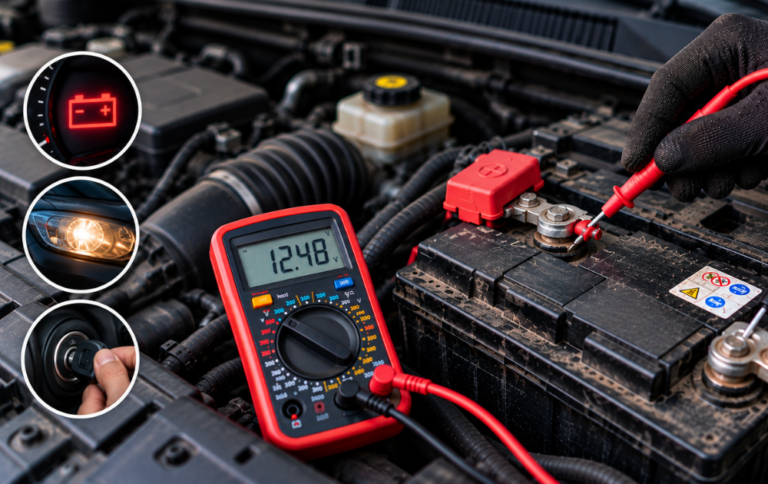
9. How to Know When Your Car Battery Needs Replacing
Before spending money on a new battery, make sure the existing one is actually failing.
A battery may be approaching the end of its service life if you notice the following signs:
- The engine cranks more slowly than usual.
- The car occasionally needs a jump-start.
- The battery repeatedly loses charge.
- The battery warning light appears.
- Electrical systems behave unusually during starting.
- The battery case is swollen, cracked, or leaking.
These symptoms do not all prove that the battery is defective. For example, a battery warning light may indicate a charging-system problem rather than a battery that needs replacing.
A battery test can help establish its condition. A charging-system test can determine whether the alternator is supplying the correct charge under the specified conditions.
If the battery is swollen, leaking, unusually hot, or producing a strong sulfur-like smell, avoid handling or charging it yourself. Seek professional assistance.
The key lesson: Do not replace a battery based only on symptoms. Test it first whenever possible, so you do not spend money on a new battery while the actual fault remains unresolved.
10. How Much Should You Spend on a Car Battery?
There is no single price that applies to every car battery. The cost depends on the battery’s size, technology, capacity, brand, warranty, and local market.
Conventional flooded batteries are generally less expensive than EFB and AGM batteries. Larger batteries and specialised applications may cost more than smaller, simpler units.
Installation charges may also affect the total cost, particularly if your vehicle requires battery registration or electronic-system procedures.
To compare prices fairly, ask for the total cost of the battery and installation, if needed. Confirm whether the price includes testing, fitting, disposal of the old battery, and any required electronic procedures.
Do not compare a conventional battery with an AGM battery as if they were identical products. They are designed for different applications and may have different costs.
The best value is the battery that meets your vehicle’s specifications, offers reliable support, and fits your budget without sacrificing essential requirements.
11. Can You Replace a Car Battery Yourself?
Some conventional vehicles allow relatively straightforward battery replacement, but not every vehicle is suitable for a beginner to service.
Modern vehicles may have sensitive electronic systems, battery-monitoring sensors, unusual battery locations, or specific disconnection and reconnection procedures.
Before attempting a replacement, consult your owner’s manual and follow the manufacturer’s safety instructions.
Keep these safety points in mind:
- Switch off the vehicle and all electrical accessories.
- Remove metal jewellery and avoid placing tools across battery terminals.
- Wear suitable eye protection and follow the specified handling precautions.
- Follow the manufacturer’s exact disconnection and reconnection sequence.
- Never allow a tool to bridge the positive terminal and vehicle ground.
- Do not attempt to handle a damaged, leaking, or swollen battery.
- Never touch high-voltage components or orange cables in hybrid and electric vehicles.
A conventional 12-volt battery can deliver enough current to cause serious burns, sparks, or fire if it is short-circuited.
If the battery is difficult to access, the required procedure is unclear, or your vehicle needs battery registration, professional installation is the safer option.
12. A Simple Checklist Before You Buy
Before paying for your new car battery, take a moment to review this checklist.
| What to Check | Your Requirement |
|---|---|
| Vehicle compatibility | Confirmed for your exact car |
| Battery size | Correct dimensions and size code |
| Terminal layout | Correct positive and negative positions |
| Battery technology | Conventional, EFB, AGM, or another approved type |
| Capacity (Ah) | Meets the recommended specification |
| Starting power (CCA) | Meets the required rating |
| Manufacturing date | Checked with the seller |
| Battery condition | Good condition and properly stored |
| Warranty | Clear terms and accessible support |
| Installation | Correct fitting and any required registration |
If you can answer these points confidently, you are much less likely to make an expensive mistake.
Frequently Asked Questions
How do I know which battery fits my car?
Check your owner’s manual, inspect the existing battery label, or use a reliable compatibility guide. You will need to match the battery size, terminal arrangement, technology, and required performance ratings to your exact vehicle.
Can I use a battery with a higher Ah rating?
Sometimes, but not every higher-capacity battery is suitable. The replacement must fit correctly and be compatible with the vehicle’s charging system and battery-management requirements. Stay within the manufacturer’s approved specifications.
Is a higher CCA rating always better?
Not necessarily. A compatible battery with a higher CCA rating may provide additional starting capability, but the correct size, battery technology, and other specifications remain essential.
Can I replace an AGM battery with a conventional battery?
You should not downgrade an AGM application to a conventional battery unless the vehicle manufacturer explicitly approves that replacement. The wrong technology may wear out prematurely or interfere with the vehicle’s battery-management and start-stop systems.
How long does a car battery usually last?
Battery life varies with climate, driving habits, vehicle electrical demands, maintenance, and battery technology. Rather than relying on a fixed lifespan, watch for starting problems and have the battery tested when its performance begins to decline.
Should I buy a battery from a well-known brand?
A reputable brand can be a good starting point, but the name alone is not enough. Check compatibility, specifications, warranty coverage, manufacturing date, and the seller’s reputation.
Does a new battery fix every starting problem?
No. Starting difficulties can also result from a faulty starter motor, charging-system problems, corroded connections, or excessive electrical drain. Testing the system helps identify the actual cause.
What should I do with my old car battery?
Take it to a battery retailer, authorised collection point, or suitable recycling facility. Lead-acid batteries contain materials that should be recovered and handled through appropriate recycling channels. Do not place an old car battery in ordinary household waste.
Final Thoughts: Make the Right Choice Before You Pay
Choosing the right car battery does not have to be complicated. The most important thing is to start with your vehicle’s requirements rather than the price or appearance of the battery.
Confirm the correct size, terminal layout, battery technology, capacity, and starting-power rating. Then compare reputable products, check the warranty and manufacturing date, and make sure the battery can be installed correctly.
Most importantly, if your current battery keeps losing charge or your car struggles to start, do not immediately assume that buying a new battery will solve everything. A simple diagnostic test may reveal a charging-system fault or another problem that needs attention.
A little research before buying can save you money, prevent unnecessary repairs, and help keep your car starting reliably. When you understand what your vehicle needs, you can choose a battery with confidence instead of relying on guesswork.