Check Engine Light On? 10 Common Causes and How to Fix Them
In this article
Check Engine Light On? 10 Common Causes and How to Fix Them
Seeing the check engine light illuminate on your dashboard can be worrying, especially when your car seems to be running normally. Sometimes, the cause is minor, such as a loose fuel cap. In other cases, the warning may indicate a problem that needs immediate attention.
The good news is that you can often narrow down the cause by paying attention to your car’s symptoms and using an OBD2 scanner to read the stored diagnostic trouble codes.
In this guide, you’ll learn what triggers the check engine light, how to identify the possible cause, and what you can do to fix the problem.
What Does the Check Engine Light Mean?
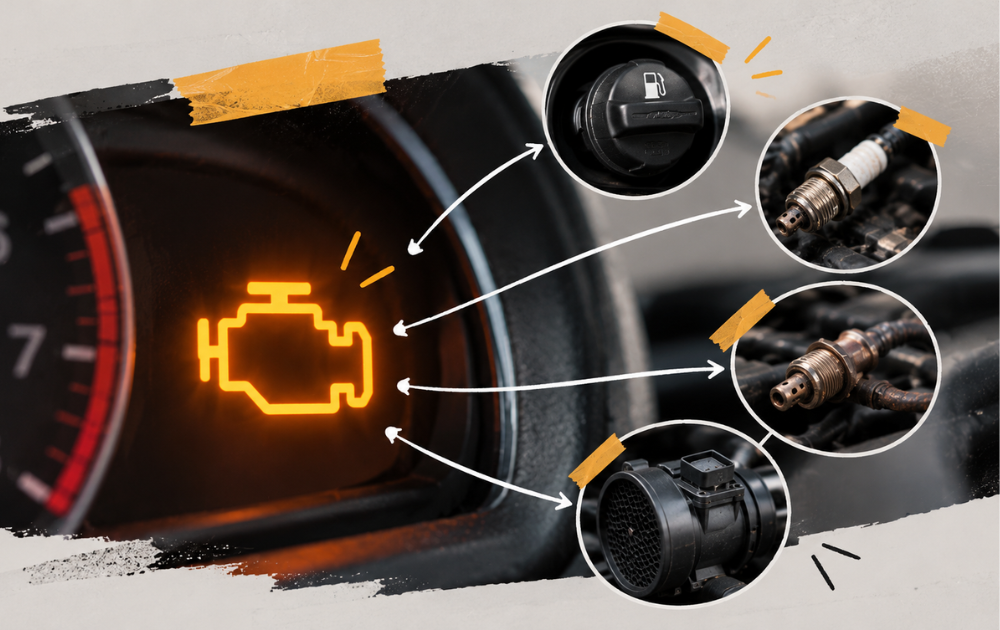
The check engine light, also known as the malfunction indicator lamp (MIL), is part of your vehicle’s onboard diagnostic system. It monitors engine performance, emissions, and related components.
When the system detects a problem, it may store a diagnostic trouble code (DTC) and turn on the warning light.
The light can appear in two main ways:
- Steady check engine light: Usually indicates a fault that needs diagnosis soon. If the car runs normally, you can often drive cautiously to a suitable repair facility.
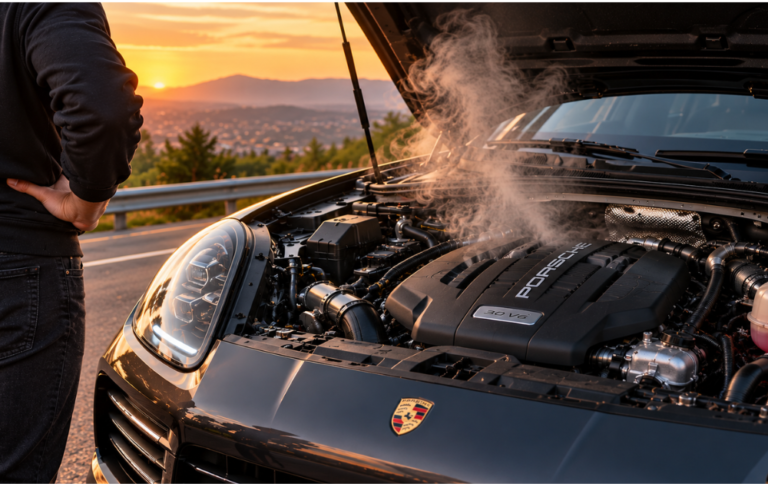
- Flashing check engine light: Often indicates an active engine misfire that could damage the catalytic converter. Reduce engine load and stop driving as soon as it is safe. If the flashing continues, have the vehicle towed.
If the engine is overheating, losing power severely, or making unusual mechanical noises, stop safely and investigate rather than continuing to drive.
10 Common Causes of a Check Engine Light
1. Loose or Faulty Gas Cap
A loose, damaged, or incorrectly fitted fuel cap can allow fuel vapors to escape from the evaporative emissions system. This may trigger the check engine light.
Common symptoms:
- Check engine light appears after refueling.
- No noticeable change in engine performance.
- An emissions-related diagnostic code may be stored.
How to fix it:
Turn off the engine, remove the fuel cap, and reinstall it securely according to the manufacturer’s instructions. Inspect the cap and its rubber seal for damage. Replace it if necessary.
The warning light may take several driving cycles to turn off after the problem is corrected.
2. Faulty Oxygen Sensor
The oxygen sensor measures the amount of oxygen in the exhaust, helping the engine control module adjust the air-fuel mixture.
A faulty sensor can affect fuel economy, emissions, and engine performance.
Common symptoms:
- Increased fuel consumption.
- Rough engine operation.
- Failed emissions testing.
- Check engine light with an oxygen-sensor-related code.
How to fix it:
Use an OBD2 scanner to identify the relevant code and inspect the sensor’s wiring and electrical connections. A sensor-related code does not automatically mean the sensor itself has failed; exhaust leaks, wiring problems, or other engine faults can produce similar readings.
Replace the sensor only after confirming the cause.
3. Faulty Mass Airflow Sensor
The mass airflow (MAF) sensor measures the amount of air entering the engine. Incorrect readings can interfere with fuel delivery.
Common symptoms:
- Hesitation during acceleration.
- Rough idling.
- Poor fuel economy.
- Difficulty starting the engine.
How to fix it:
Inspect the air intake system for loose connections, damaged hoses, or air leaks. Check the MAF sensor’s wiring and diagnostic data.
If the sensor is contaminated, use only a cleaner specifically designed for MAF sensors and follow the product instructions. Never touch the delicate sensing element.
If cleaning does not resolve the issue, further testing may be necessary.
4. Faulty Spark Plugs or Ignition Coils
Spark plugs ignite the air-fuel mixture in gasoline engines, while ignition coils provide the voltage needed to create the spark.
Worn spark plugs or failing ignition coils can cause engine misfires.
Common symptoms:
- Engine shaking or vibrating.
- Rough idling.
- Reduced acceleration.
- Increased fuel consumption.
- A flashing check engine light during severe misfires.
How to fix it:
Read the diagnostic codes and determine which cylinder is misfiring, if applicable. Inspect the spark plugs, ignition coils, and related wiring.
Replace worn or faulty components as required. If the check engine light is flashing, avoid continuing to drive because an ongoing misfire can damage the catalytic converter.
5. Catalytic Converter Problems
The catalytic converter reduces harmful exhaust emissions. Damage or contamination can prevent it from working correctly.
Common symptoms:
- Reduced engine power.
- Poor fuel economy.
- Failed emissions testing.
- An overheating exhaust system.
- A catalyst-efficiency-related diagnostic code.
How to fix it:
Do not replace the catalytic converter based on a code alone. Check for exhaust leaks, oxygen-sensor problems, engine misfires, and fuel-mixture faults first.
If the converter is confirmed to be damaged or inefficient, replacement may be necessary. Address the underlying cause to prevent the replacement unit from failing prematurely.
6. Vacuum Leak
A vacuum leak occurs when unwanted air enters the engine through a damaged hose, intake gasket, or another leaking component.
This can upset the air-fuel mixture and affect engine operation.
Common symptoms:
- Rough or unusually high idle.
- Hissing sounds from the engine compartment.
- Hesitation during acceleration.
- Lean-mixture diagnostic codes.
How to fix it:
Inspect accessible vacuum hoses and intake connections for cracks, disconnections, or deterioration.
A smoke test performed with suitable equipment can help locate difficult-to-find leaks. Repair or replace the damaged component, then verify that the fault has been resolved.
7. Faulty Thermostat
The thermostat regulates coolant flow to help the engine reach and maintain its intended operating temperature.
If it becomes stuck open or closed, the engine may operate outside its normal temperature range.
Common symptoms:
- Engine takes too long to warm up.
- Temperature gauge behaves unusually.
- Cabin heating becomes less effective.
- A coolant-temperature-related code appears.
How to fix it:
Check the engine temperature data and compare it with the manufacturer’s specifications. Inspect the cooling system and thermostat operation.
Replace a faulty thermostat when confirmed. If the engine overheats, stop driving and allow it to cool. Never open a hot cooling-system cap.
8. Fuel System Problems
The engine needs the correct amount of fuel to operate properly. A weak fuel pump, restricted fuel filter, faulty injector, or fuel-pressure problem can disrupt combustion.
Common symptoms:
- Difficulty starting.
- Engine hesitation under acceleration.
- Loss of power.
- Rough running or stalling.
How to fix it:
Read the stored diagnostic codes and inspect the fuel system according to the vehicle manufacturer’s procedures.
A fuel-pressure test and injector checks may be necessary. Avoid replacing the fuel pump or injectors without confirming that they are responsible for the problem.
9. Exhaust Gas Recirculation (EGR) System Fault
The EGR system reduces nitrogen oxide emissions by directing a controlled amount of exhaust gas back into the engine.
A stuck valve, blocked passage, or electrical fault can interfere with engine operation.
Common symptoms:
- Rough idling.
- Hesitation during acceleration.
- Poor engine performance.
- EGR-related diagnostic codes.
How to fix it:
Check the EGR valve, electrical connections, and passages for faults or carbon buildup. Use diagnostic data to determine whether the valve is operating as expected.
Cleaning or replacing the affected component may solve the problem, depending on the cause.
10. Faulty Crankshaft or Camshaft Position Sensor
These sensors provide information about engine position and speed. The engine control module uses this information to coordinate ignition and fuel injection.
If a sensor or its circuit fails, the engine may run poorly or refuse to start.
Common symptoms:
- Intermittent stalling.
- Difficulty starting.
- Sudden loss of engine power.
- Engine cranking without starting.
How to fix it:
Use an OBD2 scanner to check for relevant codes and examine live data where available. Inspect the sensor wiring, connectors, and related components.
Confirm the fault before replacing the sensor, since wiring problems and other mechanical or electrical issues can cause similar symptoms.
How to Diagnose a Check Engine Light Using an OBD2 Scanner
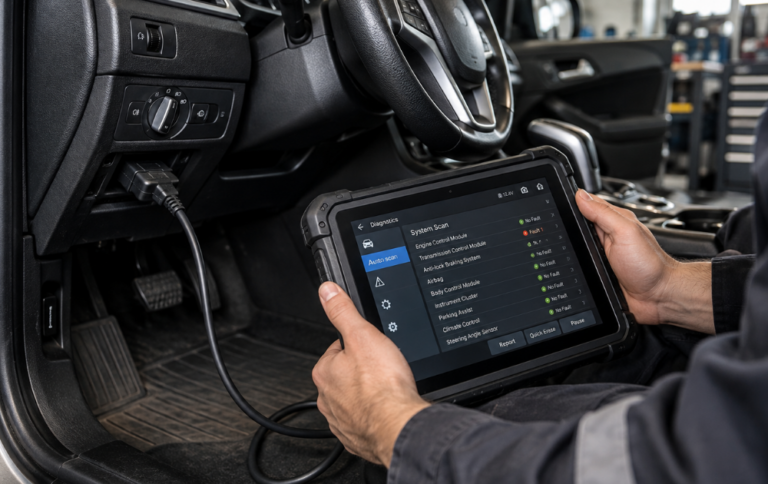
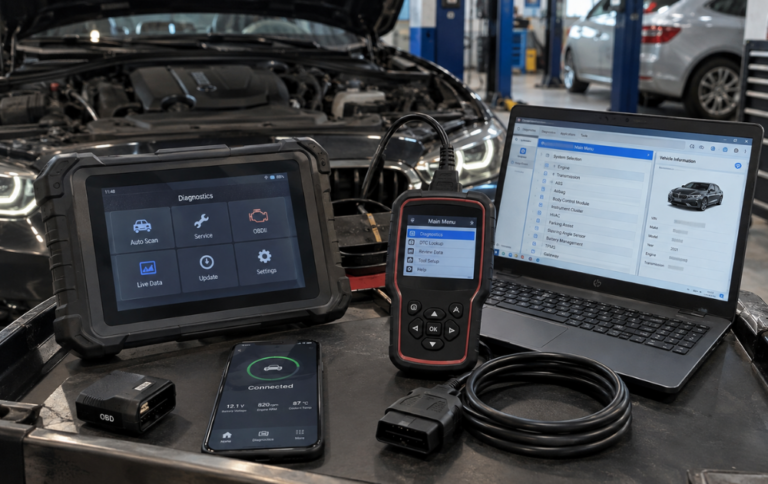
An OBD2 scanner is one of the most useful tools for diagnosing a check engine light. It retrieves diagnostic information stored by the vehicle’s onboard computer.
Follow these steps:
Step 1: Check the warning light.
Determine whether the light is steady or flashing. If it is flashing or accompanied by serious symptoms, prioritize safety before attempting further diagnosis.
Step 2: Locate the OBD2 port.
In many vehicles, the diagnostic port is beneath the dashboard near the steering column. Its exact location varies by model.
Step 3: Connect the scanner.
Turn the ignition on and follow the scanner’s instructions. Some diagnostic procedures require the engine to be running, depending on the test.
Step 4: Read the diagnostic trouble codes.
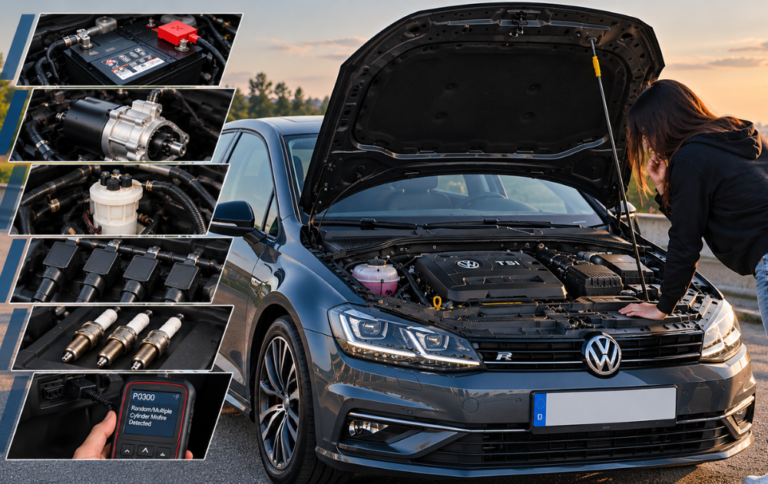
Record the codes before clearing anything. For example, P0300 generally indicates random or multiple-cylinder misfires, while P0171 indicates a system-too-lean condition on Bank 1.
Step 5: Investigate the cause.
Use the code, symptoms, live data, and appropriate tests to identify the underlying fault. A code identifies a detected condition; it does not necessarily identify the failed component.
Step 6: Repair and verify.
Correct the confirmed problem, then check whether the fault returns. Some monitors require specific driving conditions before the system can confirm that a repair was successful.
Important: Do not clear the codes before recording them. Clearing them too early can erase useful diagnostic information and reset emissions-monitor readiness.
Can You Drive With the Check Engine Light On?
Whether you can continue driving depends on the warning light and the vehicle’s behavior.
- Steady light, normal performance: You can often drive cautiously for a short distance to arrange diagnosis, provided there are no other warning signs.
- Flashing light: Reduce engine load and stop as soon as it is safe. Arrange professional assistance if the light continues flashing.
- Light with overheating, severe shaking, major power loss, or unusual mechanical noises: Stop safely and switch off the engine when appropriate. Do not continue driving until the problem has been assessed.
Even when the car appears normal, ignoring the warning can allow an emissions or engine problem to worsen.