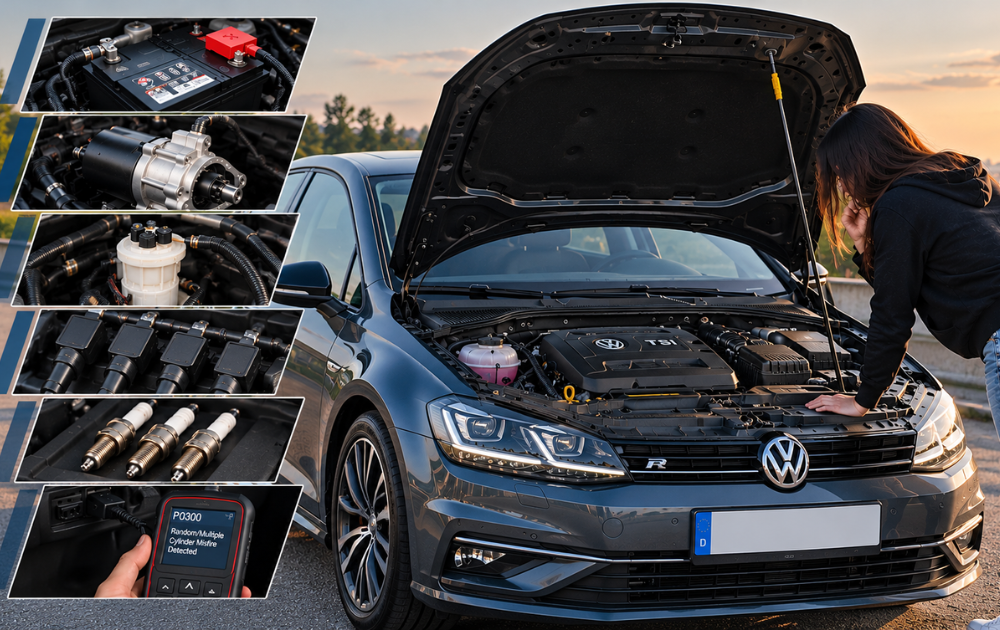
How to Diagnose a Car That Won’t Start
In this article you’ll learn
How to Diagnose a Car That Won’t Start
When your car won’t start, the problem could be a weak battery, a faulty starter motor, a fuel delivery issue, or an ignition system failure. The good news is that you can often narrow down the cause by checking a few things before replacing any parts.
In this guide, you’ll learn how to diagnose a car that won’t start, identify common symptoms, and determine what to check next.
1. Identify What Happens When You Try to Start the Car
The first step is to pay attention to what happens when you turn the key or press the start button. The symptoms can help you narrow down the possible cause.
- Nothing happens: If the dashboard lights remain off and the engine makes no sound, the battery may be completely discharged, or there may be a problem with the electrical connections.
- You hear a clicking sound: Rapid clicking often indicates a weak battery or poor battery connections. A single click may indicate a faulty starter motor or another problem in the starting circuit.
- The engine cranks but won’t start: If the engine turns over but doesn’t run, the problem may involve fuel delivery, ignition, or an engine sensor.
- The engine starts and immediately stops: This can indicate a fuel delivery problem, an immobilizer issue, or another engine management fault.
- The engine cranks slowly: A weak battery, corroded terminals, or a failing starter motor may prevent the engine from turning fast enough to start.
Identifying which situation matches your car will help you avoid wasting time checking unrelated components.
2. Check the Battery and Battery Connections
A weak or discharged battery is one of the most common reasons a car won’t start. Even if the dashboard lights turn on, the battery may not have enough power to crank the engine.
Start by checking whether the headlights appear unusually dim or the dashboard lights become noticeably weaker when you try to start the car.
Next, inspect the battery terminals. Look for corrosion, loose connections, or damaged cables. Poor electrical connections can prevent enough current from reaching the starter motor.
If you have a multimeter, measure the battery voltage with the engine off. A fully charged, conventional 12-volt lead-acid battery typically reads around 12.6 volts at rest. A significantly lower reading may indicate that the battery needs charging or further testing.
However, voltage alone cannot confirm that a battery is healthy. A battery can show a reasonable resting voltage but fail when the starter demands high current. A proper battery load or conductance test can help identify this problem.
What to do next: If the battery is discharged, charge it or use an appropriate jump-starting procedure according to the vehicle manufacturer’s instructions. If the battery repeatedly loses its charge, investigate the charging system and possible parasitic battery drain rather than assuming the battery itself is the only problem.
3. Inspect the Starter Motor and Starting Circuit
If the battery appears adequately charged but the engine doesn’t crank, the starter motor or its electrical circuit may be responsible.
When you try to start the car, listen carefully for clicking sounds. A single click may indicate a starter solenoid or motor problem, but a weak battery, poor connections, or a faulty ground can produce similar symptoms.
If there is no sound at all, possible causes include a faulty starter relay, a damaged fuse, a defective ignition switch, or a problem with the park/neutral safety switch or clutch interlock.
For an automatic vehicle, make sure the transmission is in Park or Neutral. If the manufacturer’s instructions permit it, you can try starting the vehicle in Neutral. For a manual vehicle, fully depress the clutch pedal.
If the engine cranks normally, the starter is turning the engine, so the investigation should focus on why the engine isn’t starting rather than immediately replacing the starter motor.
What to do next: If the battery and connections are in good condition but the engine still won’t crank, the starter circuit may need further electrical testing.
4. Check the Fuel Delivery System
If the engine cranks but won’t start, it may not be receiving enough fuel to run.
Possible causes include a faulty fuel pump, a blown fuel pump fuse, a defective fuel pump relay, a clogged fuel filter where applicable, or a problem with the fuel injectors.
Start by confirming that the vehicle has sufficient fuel. A faulty fuel gauge can sometimes give an inaccurate reading.
On some vehicles, you may hear a brief humming sound from the fuel tank when the ignition is switched on. However, the absence or presence of this sound does not conclusively establish whether the fuel pump is working.
If the engine still won’t start, fuel pressure may need to be tested against the manufacturer’s specifications. Some vehicles also require checks of fuel pump control circuits or injector operation.
What to do next: Avoid replacing the fuel pump without confirming that fuel delivery is actually the problem. Electrical testing and fuel pressure measurements can help distinguish a faulty pump from a wiring issue or another fuel system fault.
Never loosen fuel lines or perform fuel system tests near flames, sparks, or hot engine components.
5. Inspect the Ignition System
Gasoline engines need a properly timed spark to ignite the air-fuel mixture. If the ignition system fails, the engine may crank normally without starting.
Common causes include worn spark plugs, defective ignition coils, damaged wiring, or a problem with the engine control system.
If the vehicle was experiencing misfires, rough running, or difficulty starting before it stopped working completely, these symptoms may provide useful clues.
A qualified technician can test ignition components and check whether the engine control module is commanding a spark.
Diesel engines work differently: they rely on compression and fuel injection rather than spark plugs for ignition. On diesel vehicles, glow plugs can assist cold starting, but other causes, including insufficient fuel pressure or low compression, may also prevent the engine from starting.
What to do next: Test the components appropriate to your engine type instead of assuming every starting problem is caused by spark plugs or ignition coils.
6. Check Engine Sensors and Diagnostic Trouble Codes
Modern vehicles rely on sensors to determine when fuel injection and ignition should occur. A failure in certain sensors can prevent the engine from starting.
One important example is the crankshaft position sensor. It provides information about the crankshaft’s position and speed. If the engine control module cannot obtain the necessary signal, it may be unable to control ignition or fuel injection correctly.
Other possible causes include a faulty camshaft position sensor, wiring problems, or an engine control module fault.
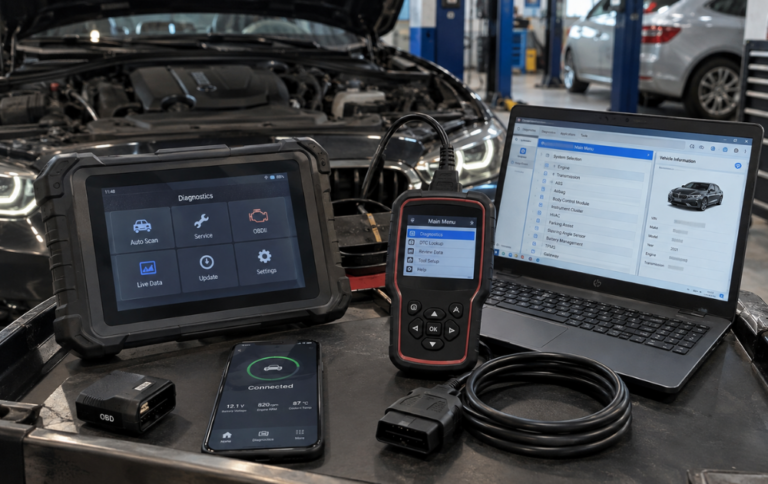
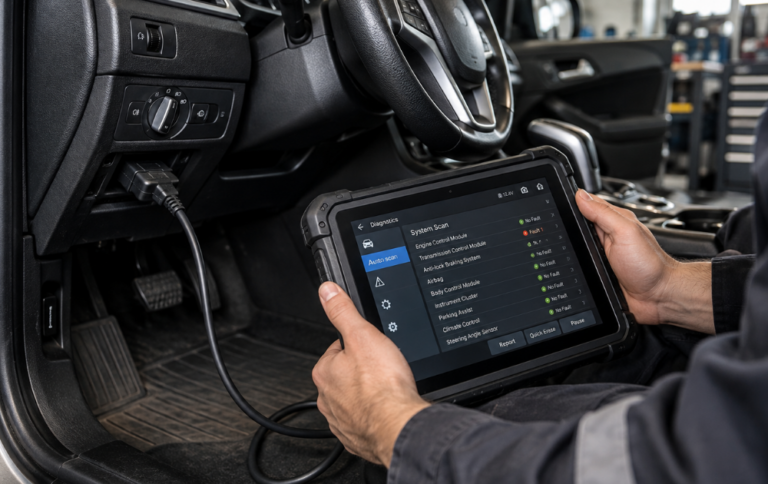
An OBD2 scanner can help identify stored diagnostic trouble codes related to these systems.
Connect a compatible scanner to the vehicle’s diagnostic port and follow its instructions to retrieve the codes. Record the results before clearing anything.
Remember that a stored code does not automatically mean the sensor named in the code has failed. Wiring, connectors, power supplies, and related components may also be responsible. Some mechanical problems may not trigger a diagnostic code at all.
What to do next: Use the codes as a starting point for further testing. If the scanner supports live data, checking engine speed while cranking may help determine whether the vehicle is detecting a crankshaft position signal.
7. Consider the Immobilizer and Key
Sometimes, a car won’t start because its anti-theft system does not recognize the key.
Depending on the vehicle, you may notice a security warning light, a key symbol on the dashboard, or an engine that starts briefly and then stops.
If your vehicle has a conventional spare key or a second programmed key, try it if available. Also, check the owner’s manual for instructions on interpreting security warning lights.
For vehicles with push-button starting, a weak key-fob battery can sometimes prevent the car from detecting the key normally. Many vehicles have an emergency key-detection procedure described in the owner’s manual.
What to do next: If the security warning remains active or the vehicle fails to recognize a programmed key, the immobilizer system may require further diagnosis. Do not assume the starter or fuel pump is faulty until this possibility has been considered.
8. Check for Other Possible Causes
If the battery, starter, fuel system, and ignition system appear to be working, other faults may prevent the engine from starting.
For example, an engine with low compression may struggle or fail to start. Mechanical timing problems can also prevent the engine from running correctly.
A severely restricted air intake, damaged wiring, or certain engine control system faults may contribute to starting problems as well.
Pay attention to any unusual symptoms that appeared before the failure, such as loud mechanical noises, overheating, repeated misfires, or a sudden loss of power.
If the engine stopped suddenly while driving, especially after unusual noises or signs of overheating, avoid repeatedly trying to start it. Further attempts could worsen an existing mechanical problem.
A mechanic may need to perform compression testing, inspect mechanical timing, or carry out more advanced diagnostic procedures.
9. Use an OBD2 Scanner to Narrow Down the Problem
If the basic checks haven’t revealed the cause, an OBD2 scanner can provide additional information.
Depending on the vehicle and scanner, it may display:
- Stored and pending diagnostic trouble codes.
- Engine speed while cranking.
- Selected engine sensor readings.
- Other live data relevant to engine operation.
These readings can help identify where further testing is needed.
For example, if the engine cranks but the scanner shows no engine speed, the crankshaft position sensor circuit may deserve investigation. However, the result should be confirmed with the appropriate diagnostic procedure.
Also, remember that a basic OBD2 scanner may not access every vehicle system. Some faults involving the immobilizer, body control module, or other manufacturer-specific systems may require more advanced equipment.
Important: An OBD2 scanner helps guide diagnosis, but it cannot always identify the exact failed part. Combine scan results with physical inspections and appropriate tests before deciding what to replace.
When Should You Call a Mechanic?
Basic checks can help you narrow down the problem, but some faults require specialized tools and experience.
Seek professional assistance if the engine still won’t start after checking the battery and basic connections, or if the diagnosis involves fuel pressure, electrical circuits, engine compression, or mechanical timing.
Stop attempting to start the vehicle if you notice smoke, a strong fuel smell, damaged electrical wiring, or signs of serious mechanical failure.
If the vehicle must be jump-started, follow the manufacturer’s procedure. Incorrect connections can damage electrical components or create a safety hazard.
Final Thoughts
Diagnosing a car that won’t start is easier when you follow a logical process instead of replacing parts based on guesswork.
Start by identifying whether the engine cranks. Then check the battery and connections, investigate the starter circuit if necessary, and move on to the fuel system, ignition system, sensors, and immobilizer.
If these checks don’t reveal the cause, use diagnostic scan data and appropriate testing to narrow down the possibilities.
The most important rule is simple: identify the cause before replacing parts. A systematic approach can save time, prevent unnecessary expenses, and help you determine when professional diagnosis is needed.