Why Is My Car Overheating? 8 Common Causes and How to Fix It
In this article you’ll learn
Why Is My Car Overheating? 8 Common Causes and How to Fix It
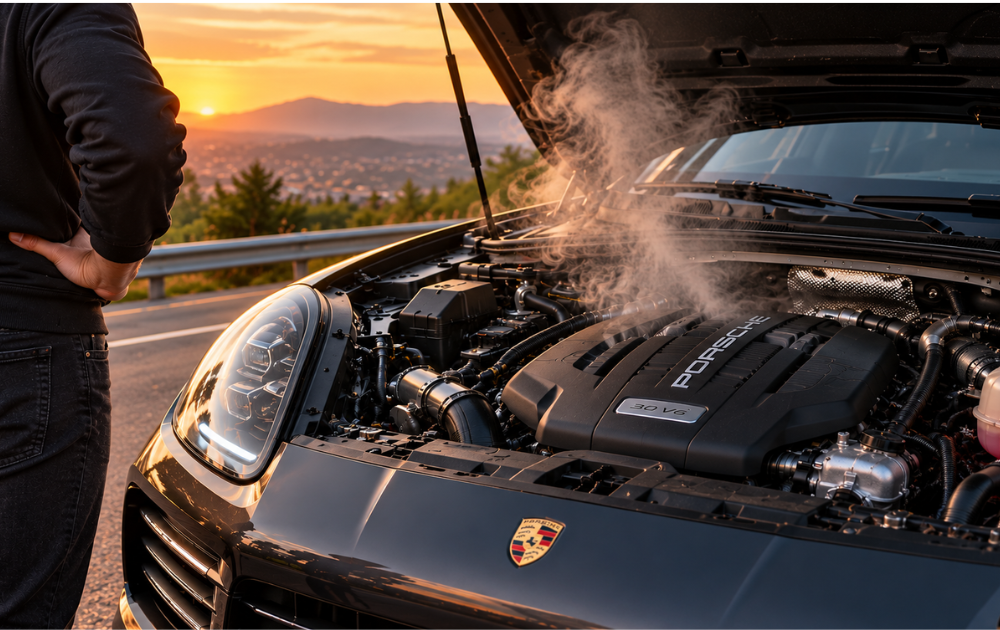
An overheating engine is a problem you should never ignore. If your temperature gauge rises above normal, a warning light appears, or steam comes from under the hood, your car may have a cooling system problem.
The cause could be something simple, such as low coolant, or a more serious issue involving the thermostat, radiator, or water pump. Understanding the symptoms can help you identify the problem and avoid unnecessary repair costs.
In this guide, we’ll cover eight common causes of engine overheating, how to recognize them, and what you can do to resolve the problem.
1. Low Coolant Levels
Coolant absorbs heat from the engine and carries it to the radiator. When the level is too low, the cooling system may struggle to control engine temperature.
Common symptoms:
- Rising engine temperature.
- Low-coolant warning light.
- Coolant level dropping repeatedly.
- Heater blowing cold air when the engine is hot.
How to fix it:
Allow the engine to cool completely, then check the coolant reservoir. If the level is low, add the coolant recommended by the manufacturer. If the level drops again, investigate the cause rather than repeatedly topping it up.
2. Coolant Leaks
Leaks can develop in radiator hoses, connections, the radiator, or the water pump. Even a small leak can eventually cause overheating.
Common symptoms:
- Coolant puddles beneath the vehicle.
- A sweet smell from the engine compartment.
- Dried coolant residue around hoses.
- Repeated coolant loss.
How to fix it:
Inspect the cooling system for visible leaks once the engine is cool. If you cannot find the source, a mechanic can perform a pressure test to identify the leak.
3. A Faulty Thermostat
The thermostat regulates coolant flow between the engine and radiator. If it becomes stuck closed, coolant circulation through the radiator may be restricted, causing the engine to overheat.
Common symptoms:
- Engine temperature rising quickly.
- Overheating despite sufficient coolant.
- Unusual temperature fluctuations.
How to fix it:
A mechanic can check engine temperature readings and test thermostat operation. If the thermostat is faulty, replace it with the correct specification for your vehicle.
4. A Damaged or Clogged Radiator
The radiator releases heat from the coolant. Internal blockages or damaged external fins can reduce its cooling efficiency.
Common symptoms:
- Overheating during long drives.
- Temperature rising under heavy loads.
- Visible radiator damage or coolant leaks.
How to fix it:
Inspect the radiator for debris, damaged fins, and leaks. Internal restrictions may require professional testing to determine whether cleaning or replacement is necessary.
5. A Failing Water Pump
The water pump circulates coolant throughout the engine. If it fails, coolant flow may become insufficient to remove excess heat.
Common symptoms:
- Engine overheating.
- Coolant leaking near the pump.
- Grinding or whining noises.
- Poor coolant circulation.
How to fix it:
Have the water pump inspected for leaks, unusual noise, and mechanical damage. If it has failed, replacement is usually necessary.
6. A Malfunctioning Cooling Fan
The cooling fan helps move air through the radiator when the vehicle is stationary or moving slowly.
Common symptoms:
- Overheating in traffic.
- Temperature rising while idling.
- Engine cooling down at higher speeds.
How to fix it:
Check the fan’s fuse, wiring, motor, and control system. A mechanic can test whether the fan operates when the engine requires additional cooling.
7. A Faulty Radiator Cap
The radiator cap maintains the cooling system’s specified pressure. If it fails, coolant may escape or boil at a lower temperature.
Common symptoms:
- Coolant escaping around the cap.
- Repeated coolant loss.
- Overheating under demanding conditions.
How to fix it:
Have the cap tested and replace it if it cannot maintain the specified pressure. Always use the correct cap for your vehicle.
8. A Blown Head Gasket
The head gasket seals the connection between the engine block and cylinder head. If it fails, combustion gases may enter the cooling system, or coolant may leak into the engine.
Common symptoms:
- Unexplained coolant loss.
- Persistent white exhaust vapor after warm-up.
- Engine misfires.
- Milky or contaminated engine oil.
- Repeated overheating.
How to fix it:
A mechanic can perform tests to check for combustion gases, coolant leaks, or compression problems. If the head gasket has failed, significant engine work may be required.
Not every symptom confirms a blown head gasket, so proper diagnosis is essential.
What Should You Do When Your Car Overheats?
If your temperature gauge enters the red zone or an overheating warning appears:
- Turn off the air conditioning.
- Pull over somewhere safe.
- Switch off the engine.
- Keep away from steam and hot coolant.
- Allow the engine to cool completely.
- Check for visible leaks only when it is safe.
- Arrange professional assistance if the problem persists.
Never open a hot radiator cap or pressurized coolant reservoir. Hot coolant can escape under pressure and cause severe burns.
How to Diagnose an Overheating Engine
Follow these basic checks to narrow down the possible cause:
- Check the coolant level after the engine has cooled completely.
- Look for leaks around accessible hoses, the radiator, and the water pump.
- Pay attention to the symptoms. Overheating in traffic may suggest a fan problem, while overheating under heavy loads can indicate other cooling-system faults.
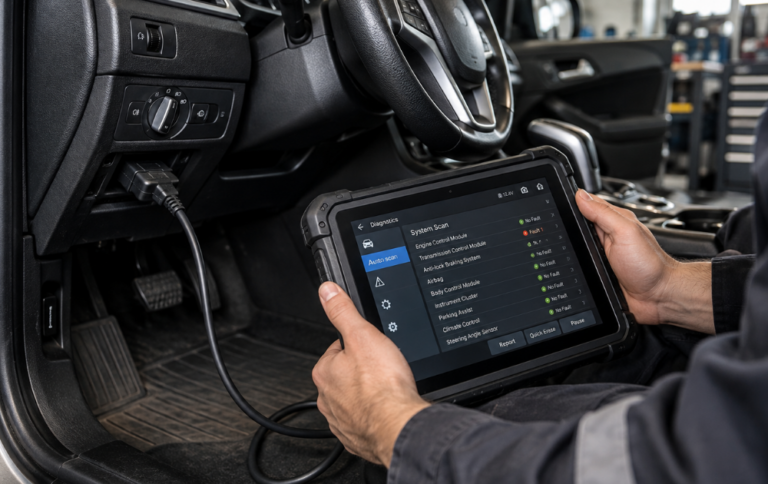
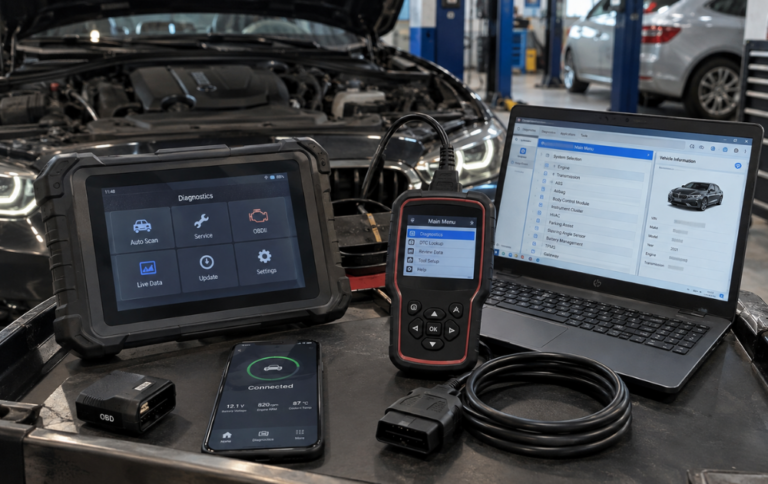
- Use an OBD2 scanner to check for relevant diagnostic trouble codes and coolant temperature readings.
- Test the suspected components before replacing parts.
Remember that an OBD2 scanner can provide useful information, but it cannot identify every mechanical fault on its own.
Can You Drive a Car That Is Overheating?
No. If your engine is genuinely overheating, stop driving as soon as it is safe.
Continuing to drive can damage the head gasket, cylinder head, and other engine components. If the temperature gauge reaches the red zone, steam appears, or a high-temperature warning activates, switch off the engine and arrange assistance.