Car Maintenance Checklist Before a Long Trip
Why Vehicle Preparation Matters Before a Long Trip
A long road trip puts more time, distance, and demand on your vehicle than normal daily driving. A car may feel perfectly fine during short trips but still have a weak battery, worn tires, low fluid levels, or another problem that becomes noticeable only after several hours on the road.
Before leaving, take some time to inspect the vehicle and make sure important maintenance is up to date. This car maintenance checklist before a long trip covers the main areas to check, including tires, fluids, brakes, battery, lights, windshield, cooling system, and emergency equipment.
If scheduled maintenance is already due, it is generally better to complete it before the trip rather than waiting until after you return.
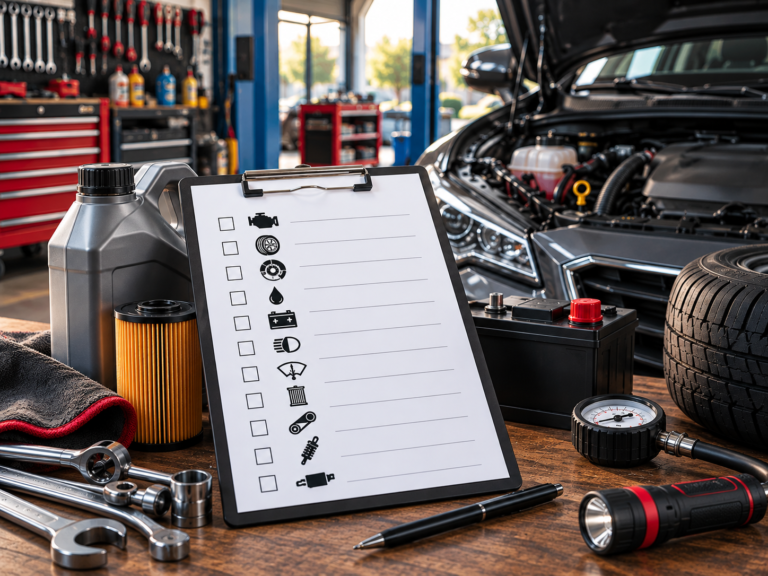
Quick Pre-Trip Car Maintenance Checklist
Before starting your journey, check:
- Tire pressure and condition
- Spare tire or tire repair kit
- Engine oil
- Coolant
- Brake fluid
- Transmission fluid, if applicable
- Windshield washer fluid
- Battery and charging system
- Brake system
- Headlights and exterior lights
- Windshield and wipers
- Belts and hoses
- Air conditioning
- Dashboard warning lights
- Fluid leaks
- Suspension and steering
- Emergency equipment
- Maintenance and service history
1. Check Your Tires
Tires should be one of the first things you inspect before a long trip. They are the only part of the vehicle that maintains direct contact with the road, so their condition can have a major effect on safety, handling, and braking.
Check all four tires for:
- Correct tire pressure
- Sufficient tread depth
- Uneven wear
- Cuts or punctures
- Cracks
- Bulges
- Damaged sidewalls
- Objects stuck in the tread
If your vehicle has a spare tire, inspect it as well.
Check Tire Pressure When the Tires Are Cold
Use the tire pressure specified by the vehicle manufacturer. The recommended pressure is normally found on the driver’s door-jamb label or in the owner’s manual.
Do not use the maximum pressure printed on the tire sidewall as the vehicle’s recommended pressure.
For the most accurate reading, check tire pressure when the tires are cold, preferably before driving or after the vehicle has been parked for several hours.
Look for Uneven Tire Wear
Uneven tread wear can indicate:
- Incorrect tire pressure
- Wheel alignment problems
- Suspension wear
- Wheel balance problems
If you find significant tire damage or unusual wear, have the vehicle inspected before starting the journey.
2. Check the Engine Oil
Engine oil is essential for lubricating and protecting the engine’s internal components. Before a long trip, check the oil level according to the procedure specified by the vehicle manufacturer.
Look for:
- Correct oil level
- Visible oil leaks
- Unusual oil consumption
- Oil that is due for replacement
If an oil change is already due, consider completing it before the trip.
Always use the oil specification recommended for your engine.
A long journey is not the ideal time to discover that the engine is consuming excessive oil or has an active oil leak.
3. Check the Coolant and Cooling System
The cooling system is particularly important during long-distance driving because the engine may operate continuously for several hours.
Check:
- Coolant level
- Coolant condition
- Visible leaks
- Coolant hoses
- Expansion tank
- Radiator area
- Cooling fan, where applicable
- Previous signs of overheating
If the coolant level is unusually low or continues to drop, find the cause before traveling.
Never open a pressurized cooling system while the engine is hot.
If the vehicle has previously experienced overheating, have the cooling system inspected before starting a long journey.
4. Check the Brake System
Your brakes should be in good condition before a long journey, especially if you expect heavy traffic, mountain roads, or frequent braking.
Check:
- Brake pad condition
- Brake discs or rotors
- Brake fluid level
- Brake pedal feel
- Unusual brake noises
- Vibrations during braking
- Brake warning light
Brake Warning Signs
Do not ignore symptoms such as:
- Grinding noises
- Excessive brake squealing
- A soft or spongy brake pedal
- Excessive pedal travel
- Steering wheel vibration during braking
- Vehicle pulling to one side
- Brake warning light
If the brakes are already due for service or you notice any of these symptoms, have them inspected before leaving.
5. Check the Battery and Charging System
A weak battery can turn a simple road trip into an unexpected breakdown, particularly if the vehicle has recently experienced starting problems.
Inspect:
- Battery terminals
- Cable connections
- Corrosion
- Battery mounting
- Starting performance
If the battery is older or the engine has recently been slow to start, have the battery and charging system tested before the trip.
For vehicles equipped with a conventional 12-volt electrical system, checking the charging system can also help identify potential alternator or charging problems.
6. Check All Exterior Lights
Before a long trip, make sure the vehicle’s lights are working correctly. This is particularly important if you will be driving at night or in poor visibility.
Test:
- Low-beam headlights
- High beams
- Parking lights
- Turn signals
- Brake lights
- Hazard lights
- Reverse lights
- Fog lights, if equipped
- License plate lights, where required
Replace defective bulbs or have electrical problems repaired before the journey.
7. Inspect the Windshield and Wipers
Long-distance driving can expose the vehicle to rain, dust, insects, and road debris. Good visibility is therefore essential.
Before leaving, check:
- Windshield condition
- Wiper blades
- Washer fluid
- Washer nozzles
- Wiper operation
Replace worn wiper blades if they:
- Leave streaks
- Skip across the windshield
- Leave areas uncleared
- Fail to remove water properly
Also clean the windshield and headlights before starting the trip.
8. Check the Windshield Washer System
Make sure the washer reservoir is filled before leaving.
Washer fluid can become particularly useful when the windshield becomes covered with:
- Dust
- Mud
- Insects
- Road spray
Check that the washer nozzles spray correctly and that the wipers remove the fluid properly.
9. Inspect Belts and Hoses
Open the hood and visually inspect accessible belts and hoses.
Look for:
- Cracks
- Cuts
- Fraying
- Bulges
- Leaks
- Loose connections
- Signs of deterioration
Pay particular attention to components that are already showing signs of wear.
If you notice obvious damage, have the vehicle inspected before the journey rather than waiting for the problem to develop during the trip.
10. Check the Air Conditioning
If you are traveling in hot weather, test the air-conditioning system before leaving.
Check:
- Cooling performance
- Airflow
- Fan operation
- Unusual noises
- Unusual smells
A long journey in hot weather can become uncomfortable if the air conditioning stops working halfway to your destination.
If the system is not cooling properly, have the problem diagnosed before traveling instead of assuming it will improve during the trip.
11. Check the Dashboard for Warning Lights
Before starting the journey, turn the ignition on and check the dashboard.
Pay attention to warning lights such as:
- Check Engine
- ABS
- Airbag/SRS
- Battery
- Oil pressure
- Coolant temperature
- Tire pressure
- Transmission
If a warning light remains illuminated after the engine starts, determine the cause before beginning a long trip.
Should You Use a Diagnostic Scanner?
A diagnostic scanner can be useful before a long trip, particularly if:
- The Check Engine light is on
- The vehicle recently experienced a fault
- You noticed unusual engine behavior
- The vehicle was recently repaired
- You want to check for stored diagnostic trouble codes
However, a diagnostic scan should not replace a mechanical inspection.
A diagnostic trouble code provides information that can help guide the diagnosis. It does not automatically mean that the component named in the code is defective.
12. Check for Fluid Leaks
Before leaving, look underneath the vehicle and around the engine compartment for unusual fluid leaks or spots.
Depending on the vehicle, you may encounter:
- Engine oil
- Coolant
- Transmission fluid
- Brake fluid
- Power steering fluid, where applicable
- Water from the air-conditioning system
Not every liquid underneath a vehicle indicates a problem. For example, clear water dripping from the air-conditioning system can be normal.
However, colored, oily, or unexplained fluid should be investigated before starting a long journey.
13. Check the Suspension and Steering
A long trip can make existing suspension or steering problems more noticeable.
Pay attention to:
- Steering vibration
- Vehicle pulling to one side
- Knocking sounds
- Excessive bouncing
- Steering play
- Uneven tire wear
If the vehicle does not feel stable or the steering behaves differently from normal, have it inspected before traveling.
14. Check Your Spare Tire and Emergency Equipment
Even a well-maintained vehicle can experience a flat tire or an unexpected mechanical problem.
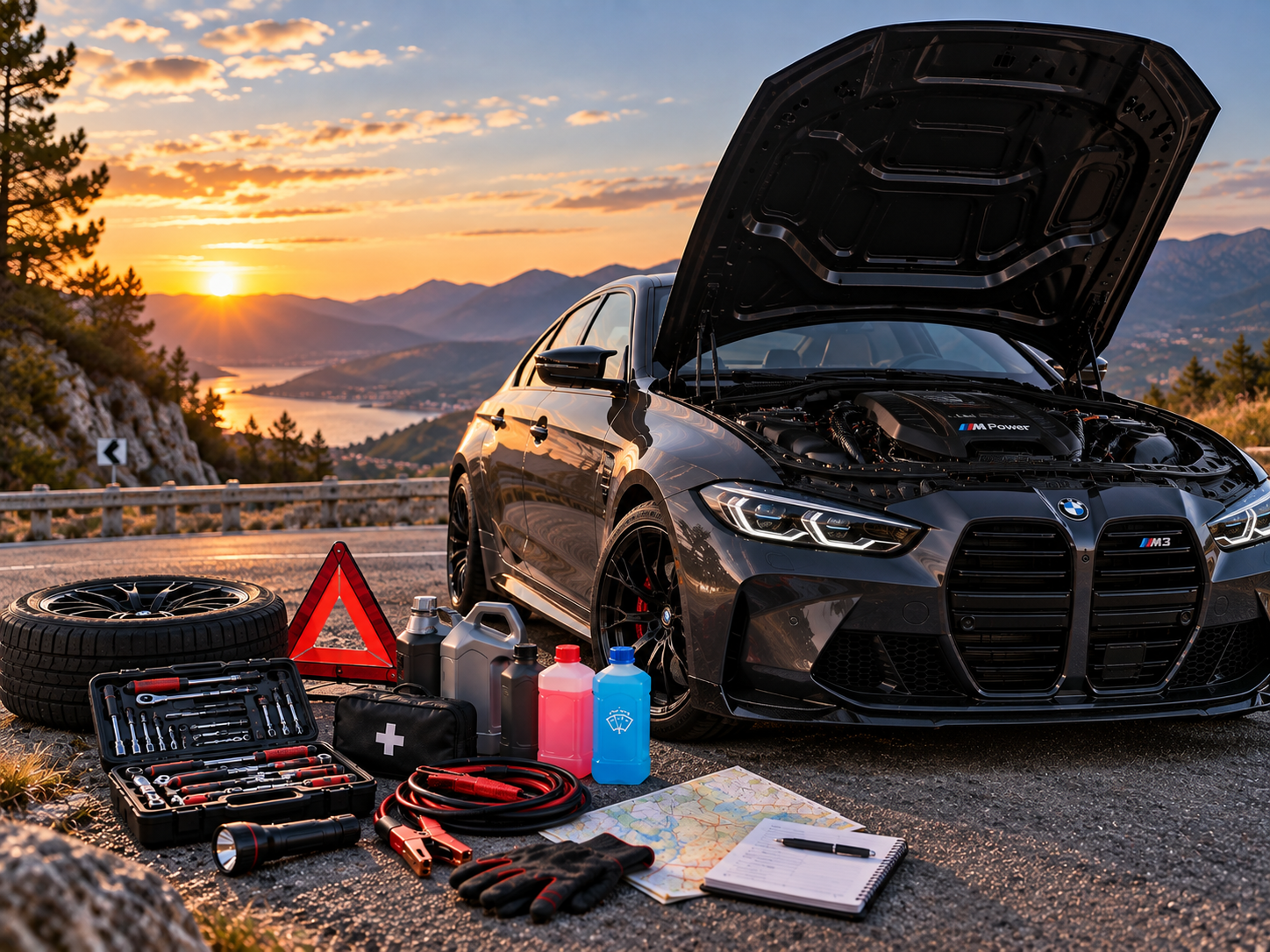
Make sure you have the appropriate emergency equipment for your vehicle, such as:
- Spare tire or tire repair kit
- Jack
- Wheel wrench
- Tire pressure gauge
- Jumper cables or approved jump-start equipment
- Flashlight
- Basic tools
- First-aid kit
- Phone charger
- Water
- Warning triangle or other roadside warning equipment where appropriate
If your vehicle has a spare tire and jack, make sure you know where they are located and how to use them before you need them.
15. Review Your Maintenance History
Before a long trip, review your previous maintenance records.
Check whether the vehicle is due for:
- Engine oil and filter replacement
- Air filter replacement
- Cabin filter replacement
- Brake service
- Tire rotation, where applicable
- Wheel alignment, where applicable
- Battery replacement
- Coolant service
- Transmission service
- Manufacturer-recommended maintenance
If you do not know when the vehicle was last serviced, consider having it inspected before starting a long journey.
16. Don’t Ignore Existing Problems
One of the biggest mistakes before a road trip is assuming that a small problem will remain small.
Avoid starting a long journey without addressing serious symptoms such as:
- Overheating
- Low oil pressure
- Serious brake problems
- Significant tire damage
- Battery or charging problems
- Major fluid leaks
- Severe steering problems
- Loud mechanical noises
- Persistent warning lights
- Major engine performance problems
A problem that seems manageable during short local trips can become much more difficult to deal with when you are far from home.
Car Maintenance Checklist the Day Before Your Trip
Use this final checklist the day before departure.
Under the Hood
- Engine oil checked
- Coolant checked
- Brake fluid checked
- Washer fluid filled
- Battery inspected
- Belts and hoses inspected
- No obvious fluid leaks
Tires
- Tire pressure checked
- Tire tread inspected
- Sidewalls checked
- No visible tire damage
- Spare tire checked, if equipped
- Jack and wheel tools present
Exterior
- Headlights working
- Brake lights working
- Turn signals working
- Hazard lights working
- Reverse lights working
- Windshield clean
- Wipers working
Inside the Vehicle
- Dashboard warning lights checked
- Air conditioning working
- Seat belts working
- Mirrors adjusted
- Emergency equipment packed
- Phone charger available