Car Maintenance Checklist: What to Check and When
Why Regular Car Maintenance Matter
Regular car maintenance is essential for keeping a vehicle safe, reliable, and efficient. A proper maintenance checklist helps you identify worn components, low fluid levels, tire problems, and other issues before they become expensive repairs.
The exact maintenance intervals vary depending on the vehicle, engine type, mileage, driving conditions, and manufacturer recommendations. Always use your vehicle owner’s manual as the primary reference for scheduled maintenance.
1. Engine Oil and Oil Filter
Engine oil lubricates the internal components of the engine and helps control friction and heat. Over time, oil becomes contaminated and loses some of its protective properties.
Check:
- Engine oil level
- Oil condition
- Oil leaks around the engine
- Oil filter condition
- Oil change interval
Replace the engine oil and oil filter according to the manufacturer’s recommended service interval.
Low oil level, contaminated oil, or visible leaks should not be ignored. Insufficient lubrication can cause increased engine wear and, in severe cases, major engine damage.
2. Tires and Wheels
Tires are directly responsible for maintaining contact between the vehicle and the road, making them an important part of regular maintenance.
Check:
- Tire pressure
- Tread depth
- Uneven tread wear
- Cracks, cuts, or bulges
- Nails or other objects in the tire
- Valve condition
- Wheel damage
- Spare tire, if equipped
Always use the tire pressure recommended by the vehicle manufacturer. The correct pressure is normally listed on the driver’s door-jamb label or in the owner’s manual.
Uneven tire wear can also indicate problems with wheel alignment, suspension components, or tire pressure.
3. Brake System
The braking system should be inspected regularly because brake components wear gradually during normal driving.
Check:
- Brake pads
- Brake discs or rotors
- Brake drums and shoes, where applicable
- Brake fluid level
- Brake fluid condition
- Brake lines and hoses
- Parking brake
- Unusual brake noises or vibrations
Warning signs such as grinding noises, excessive squealing, pulling to one side, vibration during braking, or a soft brake pedal should be inspected promptly.
4. Coolant and Cooling System
The cooling system controls engine temperature and helps prevent overheating.
Check:
- Coolant level
- Coolant condition
- Coolant leaks
- Radiator
- Coolant hoses
- Expansion tank
- Cooling fan
- Thermostat operation, when required
Check coolant only when the engine is sufficiently cool. Never open a pressurized cooling system while the engine is hot.
If the coolant level repeatedly drops, look for a leak or another cooling-system problem rather than simply adding coolant repeatedly.
5. Other Vehicle Fluids
Several fluids are essential for the operation of different vehicle systems.
Depending on the vehicle, check:
- Brake fluid
- Transmission fluid
- Power steering fluid
- Windshield washer fluid
- Differential fluid
- Transfer case fluid
- Clutch fluid
Not every vehicle uses all of these fluids. For example, many modern vehicles use electric power steering and therefore do not have power steering fluid.
Fluid level, condition, and replacement intervals should be checked according to the vehicle manufacturer’s specifications.
6. Battery and Charging System
The battery provides electrical power for starting the engine and supports the vehicle’s electrical systems.
Check:
- Battery terminals
- Corrosion around the terminals
- Battery condition
- Battery mounting
- Charging voltage
- Starting performance
A slow engine crank, dimming lights, repeated battery discharge, or difficulty starting the vehicle can indicate a battery or charging-system problem.
The alternator and charging system should also be checked if battery problems continue.
7. Lights and Electrical Components
Exterior lights are important for visibility and communication with other road users.
Check:
- Headlights
- High beams
- Daytime running lights, where equipped
- Turn signals
- Brake lights
- Tail lights
- Reverse lights
- Fog lights, where equipped
- Hazard warning lights
- License plate lights
Also check important electrical functions such as power windows, mirrors, wipers, horn, and dashboard indicators.
Replace defective bulbs or repair electrical faults as necessary.
8. Windshield and Wipers
Good visibility is essential for safe driving, especially during rain, snow, or poor weather.
Check:
- Windshield condition
- Cracks and chips
- Windshield washer fluid
- Wiper blades
- Washer jets
- Wiper operation
Wiper blades should clean the windshield without leaving large streaks or areas of poor visibility.
A damaged windshield or severely worn wiper blades should be addressed rather than ignored.
9. Engine Air Filter
The engine air filter prevents dust and other particles from entering the engine’s intake system.
Check:
- Air filter condition
- Excessive dirt or contamination
- Air filter housing
- Intake hoses and connections
A dirty or restricted air filter can reduce airflow to the engine. Replace it according to the manufacturer’s maintenance schedule or earlier if operating conditions require it.
10. Cabin Air Filter
The cabin air filter helps prevent dust, pollen, and other particles from entering the vehicle’s passenger compartment.
Check:
- Cabin air filter condition
- Airflow from the ventilation system
- Unusual odors
- Heating and air-conditioning airflow
A clogged cabin filter can reduce airflow and affect the performance of the vehicle’s ventilation and air-conditioning system.
11. Belts and Hoses
Belts and hoses operate or support important engine systems.
Inspect:
- Serpentine belt
- Accessory belts
- Timing belt, where equipped
- Coolant hoses
- Vacuum hoses
- Fuel hoses, where accessible
- Visible clamps and connections
Look for:
- Cracks
- Fraying
- Excessive wear
- Leaks
- Swelling
- Loose connections
- Unusual belt noise
Timing belt replacement is especially important on vehicles that use a timing belt because failure can cause serious engine damage on some engines.
Always follow the manufacturer’s replacement interval.
12. Suspension and Steering
The suspension and steering systems affect handling, stability, ride quality, and tire wear.
Check:
- Shock absorbers or struts
- Springs
- Control arms
- Bushings
- Ball joints
- Tie rods
- Steering components
- Wheel alignment
Signs of possible suspension or steering problems include:
- Vehicle pulling to one side
- Excessive bouncing
- Steering wheel vibration
- Uneven tire wear
- Knocking or clunking noises
- Loose or unusual steering feel
These components should be inspected if unusual handling or noises appear.
13. Exhaust System
The exhaust system carries exhaust gases away from the engine and helps control emissions and noise.
Check:
- Exhaust pipes
- Muffler
- Exhaust hangers
- Catalytic converter
- Visible leaks
- Unusual exhaust noise
A sudden increase in exhaust noise, visible damage, or unusual exhaust smell should be investigated.
14. Spark Plugs and Ignition System
Gasoline engines use spark plugs to ignite the air-fuel mixture inside the combustion chamber.
Depending on the vehicle, check:
- Spark plugs
- Ignition coils
- Spark plug wires, where equipped
- Ignition-related connectors
Worn spark plugs can contribute to rough running, misfires, poor acceleration, and reduced fuel efficiency.
Diesel engines use a different ignition system, including glow plugs, while electric vehicles do not use spark plugs.
Always follow the manufacturer’s recommended inspection and replacement interval.
15. Dashboard Warning Lights
Dashboard warning lights should never be ignored.
Pay attention to indicators such as:
- Check Engine
- Oil Pressure
- Engine Temperature
- Battery/Charging System
- ABS
- Airbag
- Tire Pressure Monitoring System
- Electronic Stability Control
- Brake System
A warning light does not necessarily identify the exact failed component. It indicates that the vehicle’s control system has detected a condition that requires further investigation.
If a warning light appears, consult the owner’s manual and have the vehicle inspected when necessary.
16. Check for Fluid Leaks
Regularly look underneath the vehicle and around the engine compartment for signs of leaking fluids.
Possible leak locations include:
- Engine
- Transmission
- Cooling system
- Brake system
- Power steering system, where applicable
- Differential
- Air-conditioning system
The color and location of a fluid can provide useful clues, but identifying the exact source should be left to proper inspection when necessary.
A new or persistent leak should be investigated before it causes further damage.
17. Keep Track of Maintenance
Keeping accurate maintenance records makes it easier to know what has already been serviced and what is due next.
Record:
- Date of service
- Vehicle mileage
- Engine oil changes
- Filter replacements
- Brake work
- Tire replacement
- Fluid replacement
- Battery replacement
- Major repairs
- Manufacturer-scheduled services
A maintenance record is also useful when diagnosing recurring problems or preparing the vehicle for future sale.
18. How Often Should You Check Your Car?
There is no single maintenance interval that applies to every vehicle.
A practical approach is to divide maintenance into different intervals.
Regular checks
Check items such as:
- Engine oil level
- Tire pressure
- Dashboard warning lights
- Exterior lights
- Visible leaks
- Windshield washer fluid
Periodic inspections
Inspect:
- Brakes
- Tires
- Battery
- Coolant
- Belts and hoses
- Wipers
- Air filters
- Suspension components
Scheduled maintenance
Follow the manufacturer’s recommended schedule for:
- Oil and filter replacement
- Brake fluid replacement
- Coolant service
- Transmission service
- Spark plug replacement
- Timing belt replacement, where applicable
- Other vehicle-specific services
Driving conditions can also affect maintenance requirements. Frequent short trips, heavy traffic, dusty environments, extreme temperatures, towing, and other demanding conditions may require more frequent maintenance.
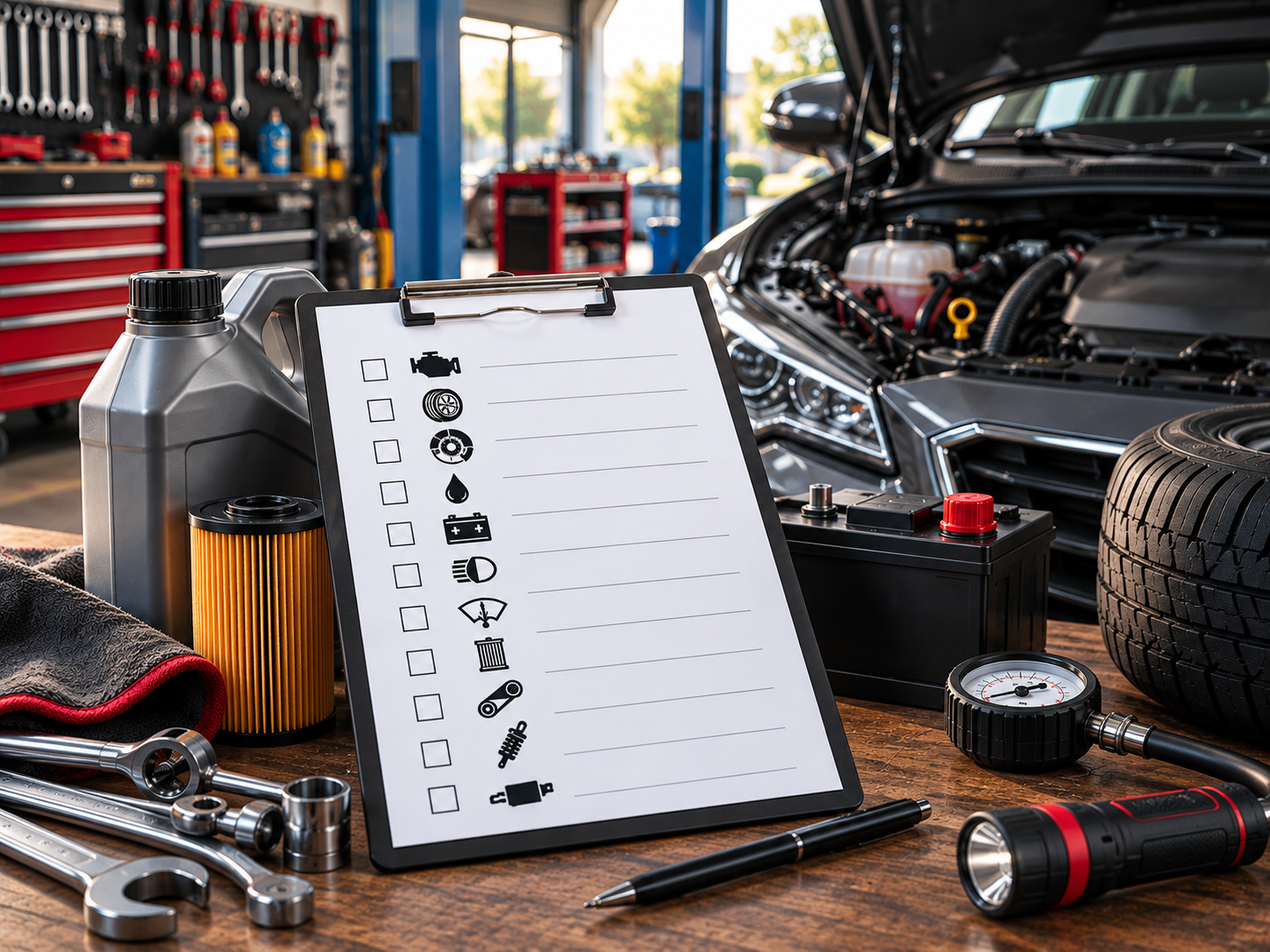
Complete Car Maintenance Checklist
| Maintenance Item | What to Check |
|---|---|
| Engine Oil | Level, condition, leaks |
| Oil Filter | Replacement interval |
| Tires | Pressure, tread, damage, wear |
| Brakes | Pads, discs, fluid, hoses |
| Coolant | Level, condition, leaks |
| Other Fluids | Brake, transmission, steering, washer, etc. |
| Battery | Terminals, condition, charging |
| Lights | Headlights, brake lights, indicators |
| Wipers | Blades, washer jets, fluid |
| Engine Air Filter | Dirt and restriction |
| Cabin Air Filter | Condition and airflow |
| Belts | Wear, cracks, tension |
| Hoses | Cracks, leaks, swelling |
| Suspension | Shocks, springs, bushings, joints |
| Steering | Tie rods and steering components |
| Exhaust | Pipes, muffler, leaks |
| Spark Plugs | Condition and replacement interval |
| Warning Lights | Active dashboard warnings |
| Fluid Leaks | Engine, transmission, coolant, brake, etc. |
| Maintenance Records | Dates, mileage, and completed services |
Final Thoughts
A good car maintenance checklist is not about replacing every component at the same time. It is about regularly checking the vehicle, following the manufacturer’s service schedule, and identifying wear or problems before they become more serious.
The most important areas to monitor are engine oil, tires, brakes, fluids, battery, lights, filters, belts, hoses, suspension, steering, and dashboard warning lights.
Following a consistent maintenance routine can help keep your vehicle reliable, safe, and ready for everyday driving while reducing the risk of unexpected repairs.